

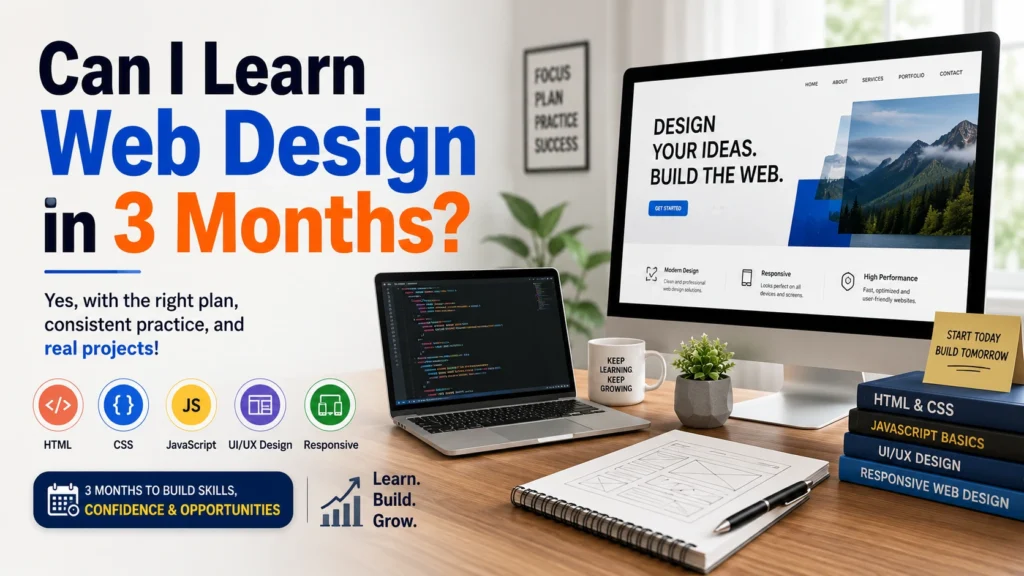
Yes, you can learn web design in three months if you study a few hours each day and stick to a focused plan. Most beginners can pick up HTML, CSS, basic UI principles, and one design tool like Figma in this time. You won’t know everything, but you’ll walk away with a real portfolio and working skills.
So can I learn web design in 3 months and actually use it in the real world? Yes, if you practice daily and build real projects instead of just watching tutorials.
What Is Web Design?
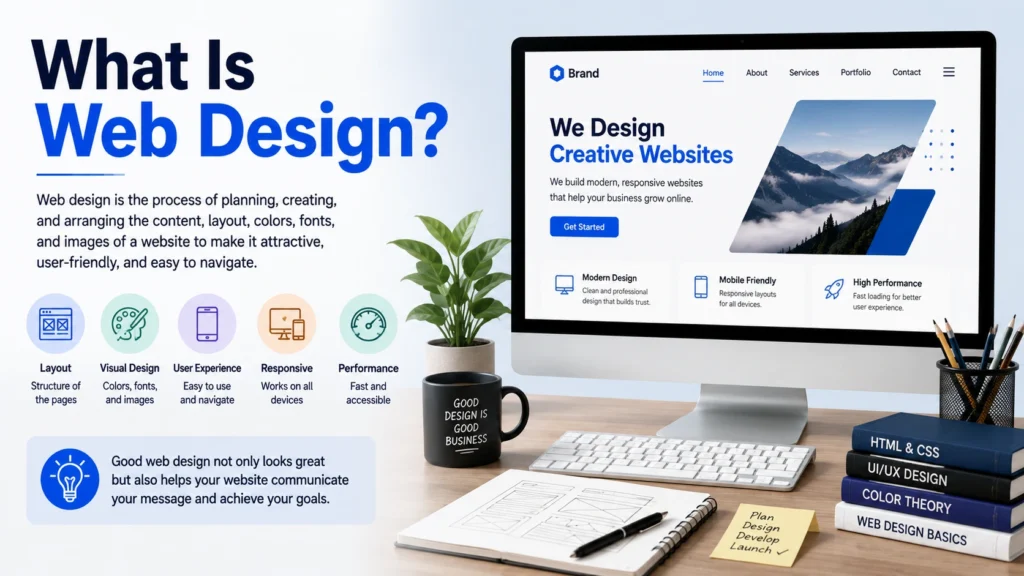
Web design is the process of planning and building how a website looks and works. It covers layout, color, typography, images, and navigation. A good web designer thinks about how visitors feel when they land on a page, not just how it looks in a screenshot.
Web design is often confused with web development. Design focuses on the look and user experience. Development focuses on the code that makes the site function. Many beginners learn both, but design is the faster skill to pick up first.
Can I Learn Web Design in 3 Months?
This is the question most beginners ask before they commit. The honest answer is yes, but with a condition. You need daily practice, not passive watching. Three months is enough time to learn the core tools, build five to eight real projects, and understand how layout and spacing work.
What three months won’t give you is deep mastery. You won’t understand every animation trick or advanced coding pattern. But you will have enough skill to take on small freelance jobs or apply for junior roles. That’s a realistic goal, and it’s achievable if you treat this like a part-time job rather than a hobby.
What Can You Learn in Web Design in 3 Months?
In three focused months, you can realistically learn:
- The basics of HTML and CSS
- How to use a no-code builder like WordPress, Webflow, or Wix
- Core design principles like spacing, contrast, and hierarchy
- How to use Figma or Canva for mockups
- Responsive design, so your sites work on phones and desktops
- Basic SEO structure for websites
- How to build and launch a simple portfolio site
You won’t become an expert coder in this window. But you’ll have enough range to build clean, working websites for small businesses or personal brands.
Skills You Need to Learn Web Design
Before you start your roadmap, it helps to know which skills to learn web design for beginners actually require. These are the web design skills to learn that matter most in your first three months:
- HTML and CSS basics — the building blocks of every website.
- Visual design principles — spacing, color theory, and typography.
- A page builder or CMS — WordPress is the most in-demand skill for freelance and agency work.
- A design tool — Figma is the industry standard for mockups.
- Responsive design — making sites look good on any screen size.
- Basic SEO — search engines reward clean structure and fast load times.
WordPress skills carry extra weight because most small business clients want a WordPress site, not custom code. If you’re based locally and want structured, hands-on training instead of scattered tutorials, WordPress courses in Rawalpindi through LocalPro1 Institute cover these exact skills with real project work, which shortens your learning curve compared to going it alone.
Best Tools for Learning Web Design
You don’t need a big budget to start. These tools cover almost everything a beginner needs:
- Figma – for design mockups and prototypes
- WordPress – for building real, functional sites
- Google Fonts – for typography without licensing headaches
- Coolors – for building color palettes fast
- VS Code – for editing HTML and CSS
- Unsplash or Pexels – for free, usable images
- Chrome DevTools – for testing responsive layouts
Stick to two or three tools at first. Switching between too many apps slows your progress and makes it harder to build muscle memory.
3-Month Web Design Learning Roadmap
If you want to know how to learn web design in 3 months, breaking it into phases keeps you on track. Here’s a simple 3 month web design roadmap you can follow:
Month 1: Foundations Learn HTML, CSS, and basic design principles. Build three small practice pages. Focus on layout and spacing before anything fancy.
Month 2: Tools and Real Projects Learn Figma and a page builder like WordPress. Recreate two existing websites to practice structure. Start your first original project.
Month 3: Portfolio and Polish Build three to five portfolio pieces. Learn responsive design and basic SEO. Start reaching out for small freelance jobs or internships.
This roadmap works because each month builds on the last. Skipping ahead usually backfires and leaves gaps in your foundation.
How Many Hours a Day Should You Study Web Design?
Two to three hours a day is a solid target for steady progress. If you can only manage one hour, you’ll still improve, just at a slower pace. What matters more than hours is consistency. Studying for thirty minutes every day beats a six-hour session once a week.
Split your time between learning and building. Spend half your time on tutorials or courses, and the other half applying what you learned to a real project. Passive learning without practice is the biggest reason beginners stall out.
Can You Get a Web Design Job After 3 Months?
You can land entry-level or freelance work after three months, but a senior role is unlikely this early. Most agencies and clients care more about your portfolio than your timeline. If your projects look clean and functional, three months of focused work can open doors.
Freelance platforms are often the fastest way in. Small businesses need simple, working websites, not cutting-edge design work. This makes them a realistic first client base for someone with three months of experience.
How to Build a Web Design Portfolio in 3 Months
Your portfolio matters more than any certificate. Aim for five to eight projects that show range. Include at least one business website, one landing page, and one personal or passion project.
For each project, write a short case study. Explain the problem, your design choices, and the result. This shows employers and clients how you think, not just what you can produce. A portfolio with context beats a portfolio with pretty screenshots and no explanation.
Common Mistakes Beginners Make
- Jumping between too many courses instead of finishing one.
- Skipping the fundamentals to jump straight into flashy design trends.
- Copying templates exactly instead of practicing original layouts.
- Ignoring responsive design until projects are already finished.
- Ignoring feedback from more experienced designers.
- Comparing their work too early to designers with years of experience.
Avoiding these mistakes saves weeks of wasted effort. Most beginners lose time not because the material is hard, but because they scatter their focus.
How to Learn Web Design Faster
If you want to speed up your progress, try these approaches:
- Recreate real websites instead of only following tutorials.
- Get feedback from other designers early and often.
- Set a weekly project deadline, even a small one.
- Study one skill at a time instead of jumping around.
- Join a design community for accountability and feedback.
Speed comes from repetition, not from finding a shortcut. The designers who improve fastest are usually the ones who build the most, not the ones who watch the most tutorials.
Is 3 Months Enough to Become a Professional Web Designer?
Three months is enough to start, but not enough to call yourself a full professional. Professional-level design usually takes a year or more of steady project work. What three months gives you is a strong entry point, a working portfolio, and enough confidence to take on real client work.
Think of this stage as your foundation, not your finish line. Many working designers are still learning new tools and techniques years into their career. The goal after three months isn’t mastery. It’s momentum.
Conclusion
So, can I learn web design in 3 months? Yes, if you commit to daily practice and follow a clear roadmap instead of jumping between random tutorials. You won’t master every skill in this window, but you’ll build real projects, a working portfolio, and enough confidence to start taking on client work. Treat these three months as your foundation, and keep building from there. If you need expert guidance to start your web design journey, contact us today at LocalPro1 Institute and take the next step with confidence.
FAQs
Can I learn web design in 3 months without a degree?
Yes. Most web design skills are self-taught or learned through short courses. A degree isn’t required to land freelance or entry-level work.
Do I need to know how to code to be a web designer?
Basic HTML and CSS help, but many designers rely on tools like WordPress or Webflow instead of writing code from scratch.
Is Figma necessary for beginners?
It’s not required, but it’s the industry standard for mockups and makes it easier to collaborate with developers later.
How much does it cost to learn web design in 3 months?
You can learn using mostly free tools and resources. Paid courses or structured training can speed up progress but aren’t required to start.
Can I freelance after 3 months of learning web design?
Yes, especially for small business websites and landing pages. Just make sure your portfolio shows finished, polished work.