Yes, digital marketing is an excellent career choice. It offers high job demand, competitive pay, and flexible remote work options in today’s tech-driven economy.
With businesses shifting budget online, skilled marketers face strong long-term security. If you want a future-proof field blending strategy, data, and creativity, Is Digital Marketing a Good Career for you? Absolutely, provided you build real-world skills.
What Is Digital Marketing?
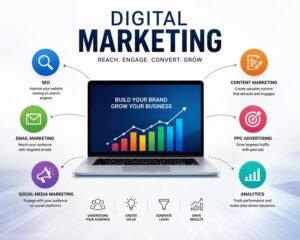
Digital marketing is the practice of promoting products, services, or brands using digital channels. Instead of relying on traditional channels like billboards or print ads, digital marketers connect with audiences online through search engines, social media, email, and websites.
The core goal is simple. You want to attract target customers, engage them with relevant content, and convert them into paying clients. The key difference lies in clear measurement. Online campaigns allow you to track every click, view, purchase, and lead in real time.
Key Components of Digital Marketing
Search Engine Optimization (SEO): SEO is the process of improving website visibility on search engines like Google. You help web pages rank higher for real search terms.
Pay-Per-Click Advertising (PPC): PPC involves running paid ad campaigns on platforms like Search, Display, Meta, and LinkedIn. You pay only when users click your ad.
Content Marketing: Content marketing focuses on creating blog posts, videos, and guides that address clear user intent. You solve customer problems before selling products.
Social Media Marketing: Social media strategy focuses on building active brand communities on platforms like Instagram, LinkedIn, and TikTok. You create posts that build trust.
Email Marketing: Email campaigns nurture direct customer relationships. You send targeted messages, special offers, and newsletters directly to customer inboxes.
Is Digital Marketing a Good Career in 2026?
The digital marketing landscape has changed dramatically in recent years. Advanced artificial intelligence tools now handle repetitive tasks like basic drafting, basic image design, and simple ad bids. However, these changes have actually increased the need for skilled digital marketers.
To understand why is digital marketing a good career in future, consider how modern businesses operate. Companies cannot rely on automated campaigns alone. They need real human marketers who understand buyer psychology, brand tone, and complex analytics.
Google’s search algorithms prioritize genuine human expertise and trustworthy answers. Automated tools can generate basic text. However, software cannot interview industry experts, test real products, or build deep human relationships with customers. Marketers who master consumer behavior, campaign strategy, and data analysis remain valuable across every single sector.
Why Is Digital Marketing a Good Career?
Choosing a career path requires looking at practical factors. You need to consider job security, pay growth, and day-to-day work conditions. Here is why is digital marketing a good job choice for professionals today:
Massive Demand Across All Sectors
Every single business needs new customers to survive. Because modern buyers search online before purchasing products, digital marketing is an absolute necessity for modern business growth.
High Flexibility and Remote Options
Digital marketing work happens on web tools and cloud platforms. This setup allows many digital marketers to work remotely from home, work as freelancers, or run independent agencies from anywhere with internet.
Measurable Results and Direct Impact
Traditional advertising makes tracking exact sales difficult. Digital marketing gives direct feedback. You can show business owners exact figures for ad spend, web traffic, lead generation, and net profit.
Fast Promotion Based on Performance
Digital marketing relies heavily on measurable performance metrics. Skilled professionals who deliver strong campaign results can earn rapid promotions based on direct performance rather than years spent in an office.
Challenges of a Digital Marketing Career
While this field offers strong advantages, you must keep realistic expectations. Understanding core challenges helps you prepare effectively:
Frequent Platform and Algorithm Updates
Major platforms like Google and Meta update search and ad systems constantly. Marketers must study new rules regularly to maintain web traffic and client conversion rates.
Rising Market Competition
The barrier to entry is relatively low. Many people attempt to enter this market, making practical skills and strong portfolio results essential for standing out.
Managing Large Amounts of Campaign Data
Handling multiple marketing channels produces large amounts of metrics. Analyzing traffic numbers, conversion stats, and ad budgets requires strong daily focus and task management.
Skills You Need to Become a Digital Marketer
Succeeding in digital marketing requires a healthy balance of technical knowledge and clear creative thinking.
Hard Skills
- Search Engine Optimization: You need to understand search intent, on-page optimization, site architecture, and technical health checks.
- Paid Media Management: You must know how to set up targeting, build ad structures, and manage campaign budgets on ad platforms.
- Data Analytics: You need to analyze reports from tracking software like Google Analytics to make smart marketing decisions.
- Copywriting: You must write clear, direct sales messaging that encourages reader action without sounding pushy or artificial.
Soft Skills
- Adaptability: You must learn new tools, platform updates, and industry workflows quickly without getting overwhelmed.
- Critical Thinking: You need to identify why campaigns fall short and make clear adjustments to improve campaign performance.
- Audience Empathy: You must understand real customer pain points to write copy that truly connects with target readers.
How to Start a Career in Digital Marketing
Starting a career does not require years of theoretical classroom study. It requires consistent hands-on practice and practical execution.
Step 1: Master the Core Fundamentals
Learn how search algorithms, paid advertising models, and social channels operate. Read official documentation and verified training resources to build basic industry knowledge.
Step 2: Build a Hands-on Test Project
Set up a basic personal website or social media account. Use this project to test SEO techniques, write blog posts, format content, and study visitor metrics firsthand.
Step 3: Get Structured Practical Training
Join practical training programs that emphasize direct project work instead of simple lectures. Choose programs that teach actual tool usage and agency workflows.
Step 4: Learn Traffic Analytics Software
Gain comfort reading web analytics and conversion tracking tools. Understanding user source metrics and buyer journeys makes you valuable to future employers.
Step 5: Build a Demonstrable Portfolio
Gather your real project metrics, design samples, and campaign results into a clean portfolio. Showing verified traffic growth proves your ability far better than basic resume claims.
Best Digital Marketing Career Paths
Digital marketing features several specialized tracks based on whether you enjoy technical analysis, creative writing, or overall business strategy.
Search Engine Optimization Specialist
SEO specialists focus on improving organic search rankings. They handle keyword research, content planning, link equity building, and technical site health checks.
PPC and Paid Media Manager
PPC managers handle paid ad budgets across search and social channels. They build ad target groups, write copy variations, set up conversion tracking, and optimize cost per acquisition.
Content Marketer and Content Strategist
Content marketers plan, write, and publish informative assets like articles, guides, case studies, and scripts. They focus on addressing search intent and converting readers into clients.
Social Media Strategist
Social media strategists manage organic brand presence across social networks. They produce engaging media, build online communities, monitor customer feedback, and drive social traffic to main business pages.
Digital Marketing Manager
Marketing managers oversee complete online campaigns across all active channels. They manage team members, assign ad budgets, analyze high-level performance metrics, and report direct ROI to company owners.
Salary of Digital Marketers in Pakistan
Salaries in Pakistan vary based on practical skill levels, campaign experience, and whether you serve local companies or foreign clients.
Entry-Level Freshers (0 to 1 Year Experience)
Fresh graduates and career switchers entering local agencies generally earn PKR 35,000 to PKR 60,000 per month as junior specialists while building core skills.
Mid-Level Marketers (2 to 4 Years Experience)
Marketers who demonstrate strong skill sets and consistent campaign management earn between PKR 80,000 and PKR 150,000 per month in established companies.
Senior Specialists and Managers (5+ Years Experience)
Experienced managers and senior specialists who handle large accounts earn PKR 200,000 to PKR 450,000 or more per month based on campaign responsibility.
Remote Freelancers and Foreign Agency Contractors
Marketers who secure international clients independently through remote platforms or agency contracts often earn $1,000 to $3,000 or more per month based on performance.
Is Digital Marketing a Good Career Without a Degree?
Yes, digital marketing is a skill-first industry. Practical execution matters far more than traditional academic degrees.
Employers, business clients, and marketing agencies focus on verifiable skill sets rather than university diplomas. If you present a portfolio showing organic traffic growth, well-structured ad setups, or strong conversion rates, employers will hire you regardless of your degree background.
Is Digital Marketing a Good Career for Freshers?
Yes, digital marketing remains one of the best entry points into the tech and corporate world for freshers.
Unlike fields that require years of technical study, freshers can pick up core digital skills within a few months of focused practice. Entry-level positions like junior SEO specialist, content writer, or social media coordinator offer clear on-the-job training and fast advancement.
Future of Digital Marketing Careers
The long-term outlook for digital marketing relies on adapting alongside modern technologies and automated tools.
Artificial Intelligence Integration
AI tools handle simple execution like initial copy drafts and basic audience setup. Future marketers will act as campaign directors. They will guide automated tools, manage quality control, and ensure marketing strategy remains human and authentic.
Generative Engine Optimization and Answer Engines
Search engines now deliver quick, direct answers to user queries. Digital marketers must optimize content for Generative Engine Optimization (GEO) and Answer Engine Optimization (AEO) by structuring text clearly and answering specific questions directly.
Focus on First-Party Customer Data
With changing privacy rules and third-party tracking limits, businesses need marketers who build direct relationships with audiences. Collecting owned data through email, SMS, and direct communities is becoming critical for long-term marketing success.
Digital Marketing vs Traditional Marketing
To see why digital marketing continues to grow, compare its direct operational methods against traditional advertising channels.
Target Audience Reach
Traditional marketing relies on local TV, radio, billboards, and newspapers. This setup targets broad geographic areas. Digital marketing allows hyper-targeted reach across specific cities, interests, behaviors, or global audiences.
Campaign Budget Efficiency
Traditional campaigns require high upfront costs for print runs or broadcast slots. Digital campaigns allow scalable budgets starting small and scaling upward based on performance.
Measurement and Tracking Accuracy
Traditional ads offer vague estimates on total views and sales impact. Digital marketing provides clear real-time tracking for every link click, product sale, and acquired customer lead.
Campaign Setup Flexibility
Traditional print ads and billboards cannot be changed once produced. Digital campaigns allow instant edits, targeting adjustments, and ad updates whenever performance drops.
Pros and Cons of a Digital Marketing Career
Pros
- Steady demand across all global business industries.
- Excellent options for remote work, flexible hours, and freelancing.
- Open access for both self-taught individuals and degree holders.
- Clear performance metrics make proving your worth simple.
Cons
- Constant need to study shifting platform rules and search algorithm updates.
- Pressure when managing live ad budgets for client businesses.
- Long daily working hours spent in front of computer screens.
Does Digital Marketing Really Work?
Yes, digital marketing works reliably when based on clear research and strategic execution rather than short-term shortcuts. Business owners sometimes ask does digital marketing work because they experienced poor results from bad planning or poor agency services.
Digital marketing succeeds when three essential core elements align:
Precise Target Targeting: Showing ads and content directly to people who genuinely need your products.
Clear Problem-Solving Content: Answering target customer questions directly without fluff or confusion.
Optimized Destination Pages: Presenting a clean, fast website experience that turns web visitors into real customers.
When you execute these steps properly, digital marketing builds predictable, repeatable sales growth for any business.
Is Digital Marketing Worth It for Long-Term Growth?
When reviewing long-term career stability, asking is digital marketing worth it comes down to overall skill transferability.
Digital marketing offers exceptional personal adaptability. The skills you master in consumer psychology, offer design, clear copywriting, web analytics, and technical optimization apply across all business models, industry sectors, and leadership roles.
Whether you want to climb agency ranks, secure remote jobs, or launch independent businesses, digital marketing provides a strong, valuable foundation for lifelong growth.
Conclusion
Ultimately, Is Digital Marketing a Good Career for anyone willing to learn real-world execution? Yes, it offers high job demand, flexible remote work, and strong income potential in today’s internet economy.
Succeeding in this field requires moving past basic theory into real execution. If you want to build practical skills and master real campaigns, joining a practical digital marketing course in Rawalpindi at LocalPro1 Institute can help you launch a successful career with complete confidence.
Frequently Asked Questions
Is digital marketing a high-paying career?
Yes. Entry-level roles start with modest pay, but experienced specialists, ad managers, and independent remote agency owners earn high incomes based on campaign results.
Can I learn digital marketing on my own?
Yes. You can learn basic concepts through online guides, blogs, and testing. However, structured practical mentorship speeds up your learning progress significantly.
Is digital marketing hard to learn?
Basic marketing ideas are simple to understand. However, mastering campaign strategy, data analysis, and advanced technical optimization requires ongoing practice and testing.