

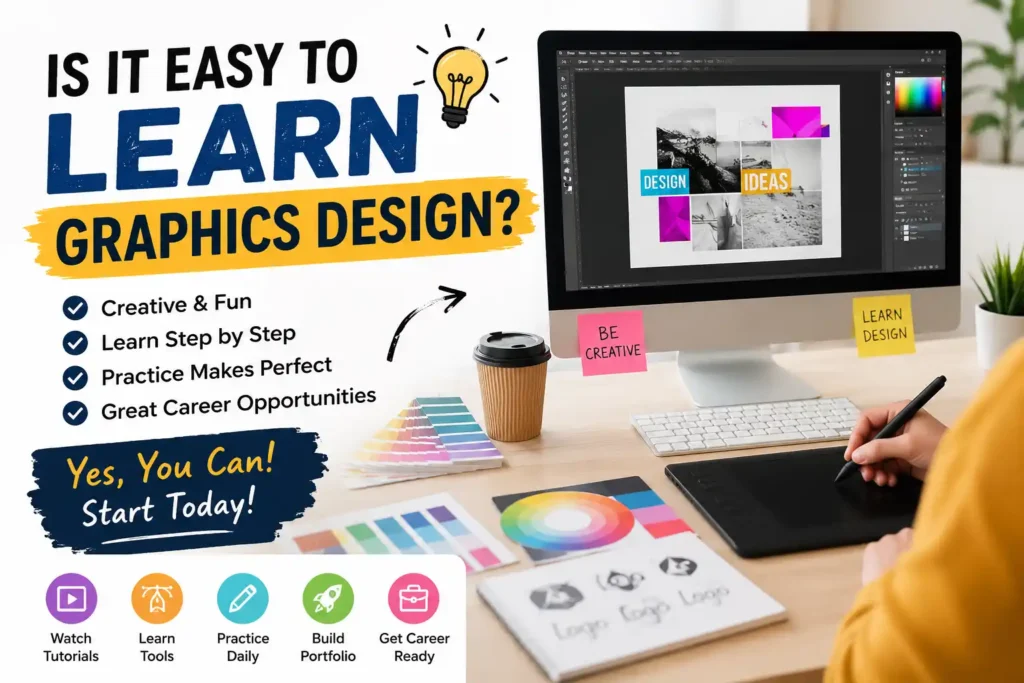
Learning graphic design is easy at the start because free tools and basic guides are everywhere today. Anyone can learn the basic tools in just a few weeks. Mastering core design principles like balance, spacing, and typography takes several months of deliberate practice.
Many beginners wonder, is it easy to learn graphics design when starting from total scratch without art skills? The short answer is yes, as long as you focus on practical projects and standard design rules rather than raw artistic talent.
What Makes Graphic Design Easy to Learn?
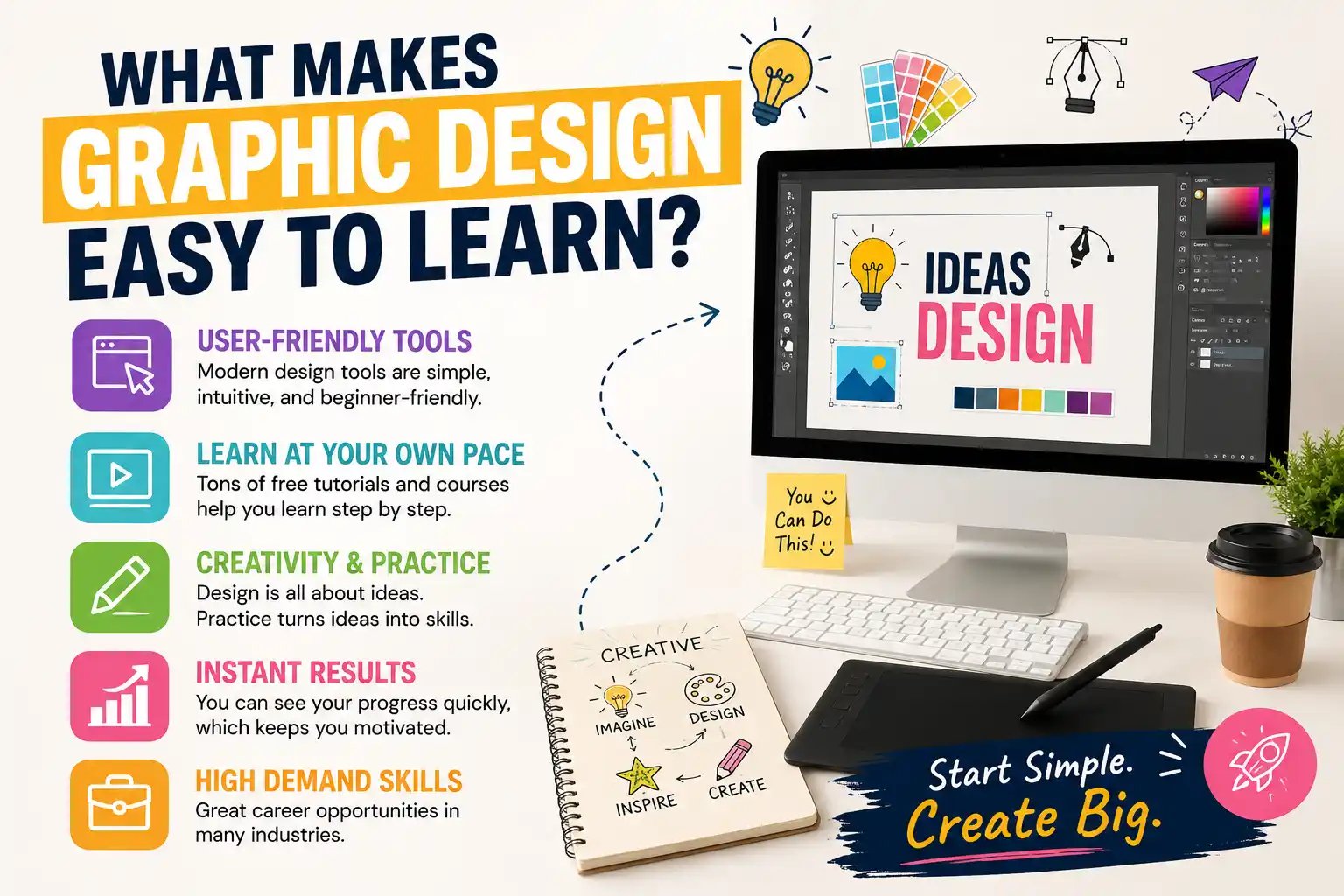
Several factors make this field far more accessible today than it was ten years ago. You do not need expensive gear or years of formal school to start.
Abundant Free Resources: You can access thousands of tutorials, video guides, and design blogs online without paying anything.
Intuitive Software: Modern creative tools offer drag-and-drop features, templates, and helpful user interfaces that speed up your progress.
Template Libraries: Pre-made visual layouts help you see how professional graphics are built from scratch.
Active Communities: Online forums and groups give helpful feedback on your early work so you can improve quickly.
No Art Degree Needed: Clients and employers care about your portfolio of actual work, not a piece of paper from a university.
When you discover how to learn to design graphics through real projects, the process becomes engaging instead of overwhelming.
What Makes Graphic Design Difficult?
While getting started is smooth, certain obstacles trip up beginners along the way. Knowing these challenges early helps you prepare.
Mastering Design Principles
Tools are easy to use, but knowing why a design looks good takes time. You must learn alignment, contrast, hierarchy, balance, and color theory. A bad layout with great software is still a bad layout.
Handling Feedback and Rejection
Design is subjective. Clients or managers will ask for changes you disagree with. Learning to take critical feedback without taking it personally is one of the hardest parts of the job.
Staying Consistent
Building solid skills requires regular work. Creating one graphic a week is not enough. You need consistent practice to build strong muscle memory and visual judgment.
Skills You Need to Learn Graphic Design
You do not need natural drawing ability to succeed. Instead, you need a mix of technical skills and visual habits that anyone can build over time.
1. Visual Hierarchy
Visual hierarchy guides the reader to the most important information first. You achieve this using font sizes, bold weights, contrasting colors, and smart positioning on the page.
2. Color Theory
Colors trigger emotions and direct attention. You need to know how primary, secondary, and complementary colors work together. Good color contrast also ensures your text remains clear and easy to read.
3. Typography
Typography is the art of arranging text. Understanding font families, line spacing, letter spacing, and font pairing is essential for clean visual communication.
4. Layout and Grid Systems
Grids keep elements organized and balanced. Alignment tools ensure your margins look even and your design feels grounded rather than chaotic.
5. Communication and Problem Solving
Every project solves a specific problem for a client. You must listen carefully to client goals, understand target audiences, and translate brief ideas into visual solutions.
You can read about: Can AI Replace Graphic Designers?
Can You Learn Graphic Design Without a Degree?
Yes, you can build a successful graphic design career without a college degree. Many active professionals today are completely self-taught or learned through practical short courses.
When comparing a four-year university degree to short courses or self-study, the biggest differences come down to time and focus. A university degree takes three to four years, costs a lot of money, and focuses heavily on broad academic theory. On the other hand, self-study or targeted vocational short courses take three to six months, cost far less, and focus purely on practical tools, hands-on skills, and building a job-ready portfolio.
Employers care most about your portfolio. A clean portfolio showing five strong projects speaks louder than a four-year diploma. When you practice how to learn design with real client briefs, you build proof of your actual capability.
Can You Teach Yourself Graphic Design?
Teaching yourself is fully possible if you stay disciplined and follow a structured study plan. Thousands of designers start by watching online tutorials and recreating designs they admire.
To teach yourself successfully, follow these habits:
- Reconstruct existing ads and flyers to figure out how they were made.
- Work on fictional client briefs to build realistic projects.
- Share your work in design communities to get unbiased feedback.
- Study daily work from experienced creators on portfolio sites.
Self-study gives you total control over your schedule. The only trade-off is that you must keep yourself accountable without a teacher pushing you forward.
How Long Does It Take to Learn Graphic Design?
The time it takes depends on your commitment level and how many hours you practice each day. Here is a realistic timeline for beginners:
1 to 2 Months: Basic Tools
You learn how to open software, use basic vector tools, manipulate layers, crop images, and export clean graphics files.
3 to 6 Months: Core Principles
You start applying color rules, typography hierarchy, and grid layouts. You can take on small freelance projects or basic layout assignments.
6 to 12 Months: Job-Ready Portfolio
With daily effort, you build a professional portfolio containing brand identities, social media kits, and print assets. At this stage, asking is it easy to learn graphics desgin feels natural because your habits are well established.
Best Graphic Design Software for Beginners
Choosing the right software helps you avoid frustration early in your learning process. Start with tools matching your current skill level.
1. Vector Graphics Tools
Vector software creates logos and illustrations that scale to any size without losing quality. Industry standard tools use paths and nodes to build sharp visual elements.
2. Photo Editing Tools
Raster software lets you edit photos, remove backgrounds, adjust brightness, and combine images into compositions.
3. Layout Tools
Layout software handles multi-page documents like booklets, ebooks, magazines, and detailed brochures with precision margins.
4. Free Online Design Tools
Simple browser tools offer quick templates for non-designers who need fast graphics without learning complex menu systems.
Learning how to graphic design starts with picking one primary tool and mastering its core shortcuts before moving to the next.
Step-by-Step Roadmap to Learn Graphic Design
Following a systematic step-by-step roadmap saves you months of aimless guessing.
Phase 1: Focus on Fundamentals
Do not touch software on day one. Spend your first week studying real ads, posters, and logos. Identify why certain layouts capture your attention while others look messy.
Phase 2: Learn One Tool Deeply
Pick vector software first. Practice drawing shapes, using the pen tool, combining paths, and setting up clean artboards.
Phase 3: Copy and Deconstruct
Find high-quality designs on top portfolio platforms. Try to recreate them pixel for pixel. This exercise builds speed and teaches you hidden software techniques.
Phase 4: Build Original Projects
Create unique branding packages, logo concepts, or ad sets for imaginary local businesses. Solve real user problems with your visuals.
Phase 5: Build Your Portfolio
Select your top projects and showcase them cleanly on a portfolio page. Add brief descriptions explaining your process and design decisions.
Common Mistakes Beginners Should Avoid
Avoiding common pitfalls speeds up your growth and keeps your work looking clean and professional.
Using Too Many Fonts: Stick to two font families per project. Mixing five different fonts makes your work look cluttered.
Ignoring White Space: Empty space gives your design room to breathe. Do not try to fill every square inch of the canvas.
Poor Contrast: Dark text on dark backgrounds hurts readability. Always ensure text stands out clearly against background elements.
Stretching Images and Fonts: Always hold the shift key to scale items proportionally. Never stretch text or photos out of shape.
Ignoring Alignment: Randomly placed objects make layouts look sloppy. Use alignment tools to line elements up perfectly.
Understanding how to do graphic design correctly means catching these errors before you present work to clients.
Tips to Learn Graphic Design Faster
If you want to speed up your learning curve without burning out, use these proven strategies:
Practice Every Day: Dedicate 45 minutes daily to hands-on creation rather than passive video watching.
Limit Your Color Palette: Restrict early projects to two or three colors. This constraint forces you to focus on contrast and layout structure.
Collect Design Inspiration: Save designs you like in an inspiration folder. Look at them closely to figure out what choices made them work.
Ask for Direct Critique: Share work with experienced creators and act on their constructive notes quickly.
Learn Keyboard Shortcuts: Memorizing shortcuts cuts your production time in half and keeps your focus on creativity.
With targeted daily effort, you will realize it is easy to learn graphics desgin when you focus on systematic habits.
Conclusion
So, is it easy to learn graphics desgin? Getting started with basic tools is simple, but building true professional expertise takes practice, discipline, and solid foundational knowledge. You do not need innate artistic genius to succeed. Focusing on core design principles, studying real examples, and building a practical portfolio will set you up for long-term success.
If you want structured guidance and hands-on mentorship to speed up your learning, enrolling in a practical course is a great next step. For students in Pakistan looking to build practical skills quickly, taking a professional Graphic Design course in Rawalpindi at LocalPro1 Institute gives you direct training, portfolio support, and clear career path guidance.
Frequently Asked Questions
Do I need to know how to draw to learn graphic design?
No, drawing skills are not required. Graphic design focuses on layout balance, typography, alignment, and visual communication using digital tools.
Can I learn graphic design on a budget laptop?
Yes. Most beginner software runs smoothly on standard modern laptops with decent memory and standard display resolution.
How do beginners start learning design effectively?
Beginners should study core fundamentals first, select one vector program, copy great designs for practice, and start building simple original projects.
Is graphic design hard for complete beginners?
It feels easy to start using basic layouts, but mastering grid alignment, typography pairings, and client briefs requires regular practice.