Digital marketing tools help businesses promote their products and services online. They make it easier to manage websites, improve search rankings, create content, run ads, and track results. Some tools are free, while others offer paid features for growing businesses. The right tools depend on your goals, budget, and marketing skills.
What Are Digital Marketing Tools? They are apps and software that help marketers plan, manage, and measure online campaigns. For example, a small business can use Google Analytics to track visitors, Canva to create graphics, and Google Search Console to monitor search performance. Using a few suitable tools can save time and support better marketing decisions.
What Are Digital Marketing Tools?
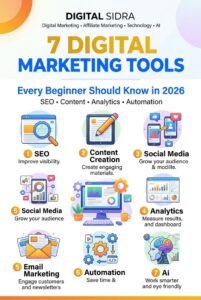
Digital marketing tools are software platforms that help people carry out online marketing tasks. They support activities such as search engine optimization (SEO), social media marketing, email campaigns, paid advertising, and website analysis. These tools help marketers work with data instead of relying only on guesses. They can show which pages attract visitors, which ads generate leads, and which content gets attention.
For example, a local training center wants more students to visit its website. It can use SEO tools to find relevant keywords, social media tools to schedule posts, and analytics software to measure website traffic. This explains what digital tools are in marketing and why businesses use them. Each tool serves a purpose, so choosing software should start with a clear marketing goal.
Why Are Digital Marketing Tools Important?
Digital marketing tools help businesses manage online tasks and understand their results. They are useful for small shops, large companies, freelancers, and marketing teams.
Here are the main benefits:
- Save time: Automate routine tasks, such as scheduling posts and sending emails.
- Reach the right audience: Use keyword and audience data to plan campaigns.
- Measure results: Track clicks, visits, leads, and sales.
- Improve content: Find topics that match what people search for.
- Manage campaigns: Keep marketing tasks organized across different channels.
- Support better decisions: Compare results and adjust weak campaigns.
For example, a business spending money on online ads needs to know whether those ads generate sales. Tracking clicks alone is not enough. Conversion data can show whether visitors take useful actions, such as filling out a form or making a purchase.
What Are the Different Types of Digital Marketing Tools?
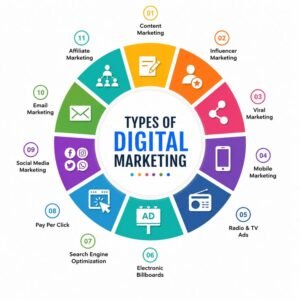
Different tools support different marketing tasks. You do not need every tool available. Start with the ones that match your business needs.
1. SEO Tools
SEO tools help websites appear in relevant search results. They support keyword research, site checks, backlink reviews, and performance tracking.
Popular examples include:
- Google Search Console: Shows search clicks, impressions, indexing issues, and search queries.
- Semrush: Supports keyword research, competitor analysis, and site audits.
- Ahrefs: Helps research keywords, backlinks, and competing websites.
For example, a course provider can use keyword research to learn whether people search for beginner computer classes or professional training. This helps guide website content.
2. Social Media Marketing Tools
These tools help businesses manage social accounts, publish content, and review engagement. Examples include Meta Business Suite, Buffer, and Hootsuite. Depending on the platform, users can schedule posts, manage comments, and view performance reports.
A local business could plan a week’s worth of posts in advance. It can then review which posts attract more clicks and interactions.
3. Email Marketing Tools
Email marketing tools help businesses send newsletters, offers, updates, and follow-up messages. Popular options include Mailchimp and Brevo. Features may include contact lists, email templates, signup forms, and automated messages.
For example, a training institute can send course details to people who have requested information. It should get proper consent and provide a clear way to unsubscribe.
4. Content Marketing Tools
Content tools help marketers research, write, edit, and plan useful content. They can also support teamwork and content calendars.
Examples include Google Docs, Grammarly, and ChatGPT. These tools can help organize ideas and check drafts, but people should review facts, add useful examples, and ensure the content meets readers’ needs.
5. PPC and Advertising Tools
Pay-per-click (PPC) tools help businesses create and manage paid online ads. They can track ad clicks, spending, conversions, and campaign performance. Google Ads is a common example. Meta Ads Manager helps manage ads across supported Meta platforms.
For example, a business can run a campaign for a specific course. It should compare the cost of each lead with the number of people who actually enroll.
6. Website Analytics Tools
Analytics tools show how people use a website. They help marketers understand traffic sources, popular pages, and important actions. Google Analytics 4 can measure website activity and events. Microsoft Clarity offers features such as heatmaps and session recordings to help teams study user behavior.
Use these insights to find problems. If visitors leave a course page without contacting the business, review the page’s content, loading speed, and contact options before changing the campaign.
7. Graphic Design and Video Tools
Visual content tools help create images, ads, presentations, and videos. Canva and Adobe Express are useful for graphics, while CapCut supports video editing.
These tools can help beginners prepare content without advanced editing skills. Still, check image quality, spelling, brand colors, and usage rights before publishing.
8. CRM and Marketing Automation Tools
Customer relationship management (CRM) tools help businesses organize customer details, sales leads, and follow-up tasks. Platforms such as HubSpot and Zoho CRM offer features for managing contacts and tracking customer interactions. Some plans also include email automation and campaign reports.
These tools can help a sales team respond to new leads on time. Businesses must handle customer data responsibly and restrict access to people who need it.
How Do Digital Marketing Tools Help Businesses Grow?
Digital tools marketing teams use can support each stage of the customer journey, from finding a business online to becoming a paying customer. For example, a training center can use SEO to attract people searching for courses. Social media can introduce its programs, while analytics can show which pages bring inquiries.
To get useful results, connect each tool to a clear goal. Track leads and sales, not just likes or website visits. Review results each month and improve the campaigns that perform poorly.
How to Choose the Right Digital Marketing Tools
Before paying for software, ask what problem you need to solve.
- Set a goal: Decide whether you want more traffic, leads, sales, or engagement.
- Check your budget: Start with free plans when they meet your needs.
- Compare features: Make sure the tool supports your main tasks.
- Check ease of use: Choose software you can learn and manage.
- Review reports: Pick tools that measure results that matter to your business.
You can start with Google Search Console, Google Analytics, and Canva. Add paid tools when you need features that free options cannot provide.
Common Mistakes to Avoid When Using Digital Marketing Tools
Even useful tools cannot fix a weak marketing plan. Avoid these common mistakes:
- Using too many tools: Multiple platforms can waste time and create extra costs.
- Ignoring your goals: Every tool should support a clear business need.
- Trusting data without review: Check tracking settings before making major decisions.
- Expecting instant results: SEO and audience growth often take time.
- Publishing unchecked AI content: Review facts, examples, and wording before publishing.
- Ignoring customer privacy: Follow relevant data protection rules and obtain consent when required.
Choose tools that solve real problems. Review their value regularly and remove subscriptions you no longer need.
Are Digital Marketing Tools Worth Learning?
Yes. Learning digital marketing tools can help students, job seekers, freelancers, and business owners build useful skills. Employers and clients often value people who can use these tools to plan campaigns and measure results. If you are a beginner, learn one tool for each main task. Practice keyword research, create a social media campaign, and study a basic analytics report. These small projects can help you understand how digital marketing works.
Students interested in professional training can explore Digital Marketing Courses in Rawalpindi at LocalPro1 Institute to develop practical skills and learn how to use marketing tools for real tasks.
Conclusion
What Are Digital Marketing Tools? They are apps and software that help businesses manage online marketing, reach customers, and measure results. Common types include SEO, social media, email, advertising, analytics, content, and CRM tools.
Start with a few tools that match your goals. Learn how to use them, review the data, and improve your work over time. The right tools support a clear marketing plan, but useful content and a good customer experience remain essential. Contact us today to learn about digital marketing training and take the next step toward your career.
FAQs
What are the basic tools of digital marketing?
Basic tools include Google Search Console for SEO, Google Analytics for website data, Canva for graphics, and an email marketing platform for campaigns.
What are the five main digital marketing tools?
Five common categories are SEO tools, social media tools, email marketing tools, advertising tools, and website analytics tools.
Are digital marketing tools free?
Some tools offer free plans, including Google Search Console and Google Analytics. Other platforms charge for advanced features, higher usage limits, or team access.
Which digital marketing tools are best for beginners?
Google Search Console, Google Analytics, Canva, and Meta Business Suite are useful starting points. Choose based on the task you want to learn.
Do I need digital marketing tools to get a job?
Learning relevant tools can improve your job prospects. Employers may also expect knowledge of marketing basics, communication, reporting, and campaign planning.