
People use search engines every day to find answers, products, services, and local businesses. A useful website can still be hard to find without good search visibility. SEO helps search engines understand your pages and connect them with relevant searches.
Why Is Search Engine Optimization Important? SEO helps people discover useful websites through organic search. It can bring relevant visitors, support leads, improve local visibility, and help useful content reach the right audience. Good SEO is not just about rankings. It is about making your website easier to find, understand, use, and trust.
What Is Search Engine Optimization?
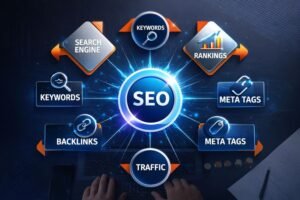
Search engine optimization, or SEO, is the process of improving a website so search engines can better discover, understand, and show its pages for relevant searches.
SEO covers several areas. On-page SEO focuses on content, headings, titles, keywords, and internal links. Technical SEO helps search engines crawl and understand your website. Off-page SEO includes signals such as relevant links and brand mentions. Local SEO helps businesses appear for searches connected to a location.
For example, imagine someone searches for “SEO course in Rawalpindi.” A training institute with a useful course page, clear information, local details, and a technically accessible website has a better chance of being discovered for that search.
SEO does not guarantee a particular ranking. Search results change based on many systems, queries, competition, and user needs. Google’s own guidance recommends focusing on helpful, reliable, people-first content rather than trying to create pages only for search engines.
Why Is Search Engine Optimization Important?
SEO matters because people often begin their search for information through search engines. If your website is difficult to discover, useful information may never reach the people who need it.
The need for search engine optimization becomes clearer when you look at how people search. A customer may search for a product before buying it. A student may search for a course before enrolling. Someone with a problem may search for an answer before choosing a service.
SEO helps your website meet these searches with useful pages.
SEO Helps People Find Your Website
Search visibility is one of the basic reasons businesses invest in SEO. Suppose a person searches for “Python course in Rawalpindi.” If your website offers that course, a well-structured page can help search engines understand its topic, location, audience, and purpose.
The goal is not to repeat the keyword many times. The goal is to provide the information the searcher actually needs.
SEO Can Bring Relevant Organic Traffic
Organic traffic comes from unpaid search results. This traffic can be valuable because users are already searching for something related to your content, product, or service.
For example, someone searching “how to check Python version” has a clear information need. A page that answers the question quickly and explains different methods can satisfy that need. The value comes from relevance, not simply visitor numbers.
SEO Can Support Leads and Sales
SEO can also support business goals. A visitor may discover an informational blog post first. Later, that person may visit a service page, compare options, contact the business, or make a purchase.
The path is not always direct. A useful article can introduce your brand before someone becomes a customer.
SEO Helps Build Online Visibility
A website needs more than good design. People must also be able to discover its pages. SEO helps connect your content with relevant searches. Clear page titles, useful headings, internal links, accessible content, and sound technical setup all help search engines process a website.
How Does SEO Help a Business?

The need of search engine optimization is not limited to large companies. A small service provider can use SEO to reach people searching for its exact services. Consider a local training center. It may offer SEO, WordPress, Python, and other IT courses. Instead of creating one general page, it can create useful course pages that explain the audience, course topics, learning format, duration, and practical outcomes.
A visitor searching for a specific course can then find a page that directly answers their questions.
SEO can help businesses:
- Reach people searching for relevant services
- Increase organic website visibility
- Explain products and services clearly
- Support lead generation
- Improve local discovery
- Answer customer questions
- Build useful content around important topics
The results depend on the quality of the website, competition, search demand, technical health, and many other factors.
Why Is SEO Important for Small Businesses?
Small businesses often serve a specific audience or location. Local SEO can help them appear when nearby customers search for related services.
For example, a person in Rawalpindi may search for “SEO training near me” or “SEO course in Rawalpindi.”
A local business can support these searches with:
- A complete website
- Useful service or course pages
- Accurate business information
- A Google Business Profile
- Genuine customer reviews
- Local content
- Clear contact information
- Consistent business details
Local SEO should not be treated as simply adding a city name to every paragraph. The page should provide real information about the service and location.
Why Is SEO Important for Websites?
A website can have excellent information and still struggle to attract search traffic if its pages are difficult to discover or understand.
SEO helps address this problem.
Important areas include:
Crawlability
Search engines need to access your pages. Technical problems, poor links, or incorrect directives can prevent important content from being discovered.
Clear Page Structure
Use descriptive titles, headings, paragraphs, lists, and links. A clear structure helps both readers and search systems understand the page.
Internal Linking
Internal links connect related pages on your website. For example, an article about SEO tools can link to an SEO course page or a related guide.
Google recommends making links crawlable so its systems can discover other pages through your website.
Mobile Experience
Many people browse websites on phones. Your pages should be easy to read and use on smaller screens.
Useful Content
A page should solve the visitor’s problem. Adding words simply to make an article longer does not create useful content.
Why Is SEO Important for Content Marketing?
Content marketing and SEO work well together because people often search for information before taking action.
A business can publish useful articles that answer real customer questions.
For example, an SEO training center might publish:
- What Is SEO?
- How to Check Python Version
- What Tools Are Used for SEO?
- Is Google SEO Easy to Learn?
- How Does Keyword Research Work?
Each article can answer a specific question while connecting naturally to relevant service pages.
The need of search engine optimization becomes stronger when content is created around real user needs instead of keyword lists.
Google’s current guidance encourages original, satisfying content that adds value rather than simply summarizing information already available elsewhere.
SEO vs Paid Advertising: What Is the Difference?
SEO and paid advertising can both bring visitors to a website, but they work differently.
| SEO | Paid Advertising |
| Focuses on organic search visibility | Uses paid placements |
| Does not charge per organic click | Usually requires an advertising budget |
| Requires ongoing content and technical work | Campaigns can start and stop quickly |
| Can build useful long-term content assets | Traffic is closely tied to active campaigns |
| Focuses on unpaid search results | Focuses on paid visibility |
Neither approach automatically replaces the other. A business may use paid ads for immediate campaign traffic while building SEO for organic discovery.
How SEO Helps Different Types of Websites
Local Business Websites
Local SEO helps connect businesses with location-based searches. Service pages, business information, reviews, and local relevance all matter.
E-commerce Websites
SEO can help shoppers discover product and category pages. Useful product details, clear navigation, descriptive content, and technical accessibility are important.
Blogs
Blogs can answer informational searches. Strong topic coverage and internal links can help readers discover related content.
Service Websites
Service businesses can use dedicated pages to explain what they offer, who it is for, how it works, and how customers can contact them.
Why Search Intent Matters in SEO
Search intent means the reason behind a search.
A person searching “what is SEO” wants an explanation. Someone searching “SEO course Rawalpindi fee” wants more specific information before making a decision.
Common search intents include:
- Informational: Looking for an answer or explanation
- Navigational: Looking for a particular website or page
- Commercial: Comparing products, services, or options
- Transactional: Ready to take an action or purchase
Matching the content to the intent is more useful than forcing the same keyword into every section.
How SEO Supports AI Overviews and AI Search
Search is changing as AI features become part of modern search experiences. Google says AI Overviews and AI Mode use existing Search systems to find relevant information and provide links to supporting pages.
This does not mean you need a secret “AI SEO” trick.
Google’s current guidance says the same SEO fundamentals remain important. Pages should be accessible, indexable, useful, and supported by clear content and internal links. For content that may be useful in AI search experiences:
- Answer important questions clearly
- Use descriptive headings
- Provide original information
- Explain complex ideas simply
- Add relevant examples
- Keep important information in text
- Link to related pages
- Support factual claims with reliable sources when appropriate
There is no guarantee that a page will appear in an AI Overview. Google also states that meeting technical requirements does not guarantee crawling, indexing, or serving.
What Are the Main Benefits of SEO?
The main benefits of SEO include:
- Better search visibility: More people can discover relevant pages.
- Relevant organic traffic: Visitors can arrive through searches connected to their needs.
- Better content discovery: Searchers can find useful guides and resources.
- Lead opportunities: Informational visitors can later become customers.
- Local visibility: Local businesses can reach nearby searchers.
- Stronger website structure: Internal links and clear pages improve navigation.
- Useful customer insights: Search queries can reveal what people want to know.
- Long-term value: Helpful content can continue attracting visitors after publication.
These benefits are not automatic. SEO requires useful content, technical care, ongoing analysis, and updates.
Is SEO Still Important in 2026?
Yes, search remains an important way people discover information, products, and businesses. The way search results are presented is changing, but SEO fundamentals remain relevant.
Google’s current guidance for generative AI search states that existing SEO practices continue to support AI features.
This means businesses should not abandon SEO because AI features exist.
Instead, they should improve the quality of their websites. Pages need to provide information that is useful enough for people to read, trust, and act on.
Google has also introduced Search Console reporting for visibility from generative AI features, showing how AI search visibility is becoming part of broader search measurement.
What Happens If a Website Ignores SEO?
Ignoring SEO does not automatically make a website invisible. However, it can create missed opportunities.
A website may have:
- Pages that are difficult to discover
- Poor internal linking
- Weak search visibility
- Unclear page topics
- Technical problems
- Content that does not match search intent
- Outdated information
- Weak local signals
A good website should serve users first. SEO helps make that useful experience easier to discover through search.
How to Start With SEO
Start with the basics instead of trying dozens of tactics at once.
1. Understand Your Audience
Know who you want to reach and what problems they are trying to solve.
2. Research Search Queries
Find the words and questions your audience actually uses. Then group related searches by topic and intent.
3. Create Useful Pages
Build pages that answer real questions. Avoid creating separate pages for every tiny keyword variation.
4. Improve Your Page Structure
Use clear titles, headings, short paragraphs, descriptive links, and relevant internal links.
5. Fix Technical Problems
Check indexing, crawlability, mobile usability, page performance, redirects, canonicals, and broken links.
6. Measure Results
Google Search Console can show queries, impressions, clicks, and search performance. Use this data to understand what needs improvement.
7. Learn SEO Through Practice
If you want structured guidance, SEO Courses in Rawalpindi can help you learn keyword research, on-page SEO, technical SEO, local SEO, and practical website work.
LocalPro1 Institute focuses on practical learning so students can work with real websites and apply SEO concepts instead of only studying theory.
Common SEO Mistakes to Avoid
Keyword Stuffing
Repeating a keyword too often makes content harder to read. Use keywords naturally.
Copying Competitors
Similar topics are normal, but copying another website does not add original value.
Writing Only for Search Engines
Google’s guidance asks site owners to focus on people-first content rather than content made mainly to attract search traffic.
Publishing Thin Content
Do not create short pages that provide little useful information just to target another keyword.
Ignoring Search Intent
A page may target the correct keyword but still fail to answer what the searcher wants.
Buying Questionable Links
Links created mainly to manipulate rankings can create problems. Focus on earning relevant links through useful resources and genuine promotion.
Chasing AI Tricks
There is no special schema or hidden markup that guarantees inclusion in AI Overviews. Google recommends applying its normal SEO fundamentals to AI search.
Conclusion
Why Is Search Engine Optimization Important? Because useful websites need to be discoverable by the people searching for their information, products, or services.
SEO connects search intent with useful content. It can support organic traffic, local visibility, leads, content discovery, and a better website structure. The search engine optimisation requires more than adding keywords to pages. Good SEO combines useful content, technical accessibility, clear structure, relevant internal links, search intent, and ongoing improvement.
The need for search engine optimization will continue to change as search develops. The basic goal stays simple: create a website that helps people and make that website easy for search systems to understand. For practical SEO training and guidance, contact LocalPro1 Institute today and start building skills through real website practice.
FAQs
Why is search engine optimization important?
SEO helps people discover relevant websites through organic search. It can support visibility, relevant traffic, leads, local discovery, and content discovery.
What is the main purpose of SEO?
The main purpose of SEO is to help search engines understand website content and connect relevant pages with people searching for related information.
What are the benefits of SEO?
SEO can improve organic visibility, attract relevant visitors, support leads, improve local discovery, and help people find useful website content.
Why is SEO important for small businesses?
SEO can help small businesses reach people searching for their services. Local SEO can also help businesses appear for relevant searches in their service areas.
Why is SEO important for a website?
SEO helps search engines discover and understand website pages. It also encourages clear structure, useful content, crawlable links, and better search visibility.
Is SEO still important in 2026?
Yes. Google says its core SEO practices remain relevant to AI Overviews and AI Mode. Websites still need useful, accessible, people-first content.
How does SEO increase website traffic?
SEO can increase organic search visibility when pages are relevant and useful for searches. Traffic depends on search demand, competition, content quality, and many other factors.
Does SEO help generate leads?
SEO can support lead generation by bringing relevant visitors to pages that explain products, services, or solutions. Strong conversion pages then help visitors take the next step.
What happens if you do not use SEO?
A website can still receive visitors without SEO, but it may miss opportunities to appear for relevant organic searches. Technical and content issues may also make discovery harder.
Is SEO better than paid advertising?
SEO and paid advertising serve different purposes. SEO focuses on organic visibility, while paid advertising uses advertising spend to gain paid placements. Many businesses use both.