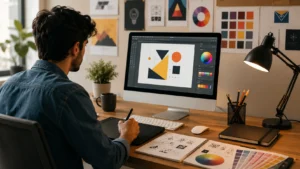

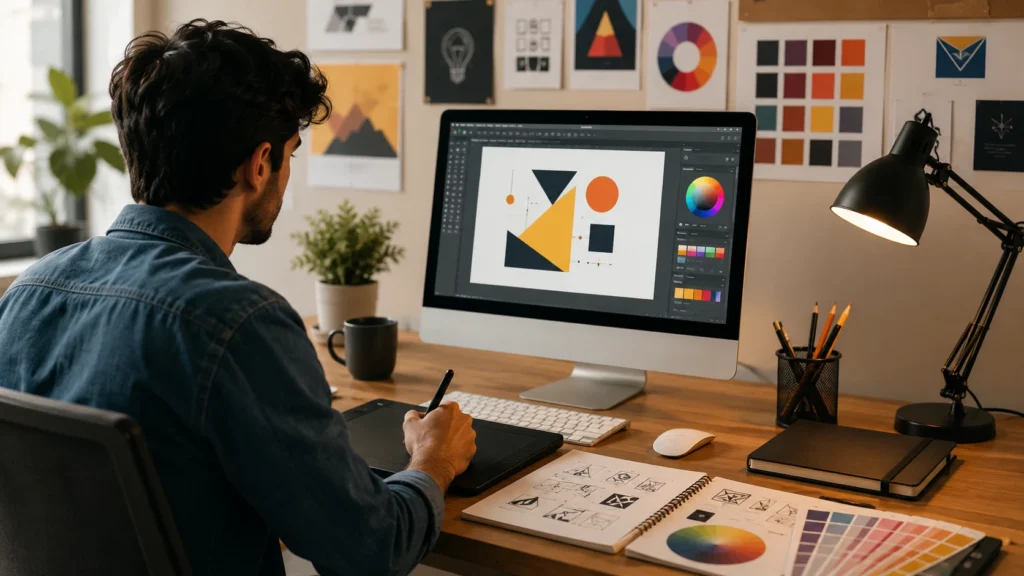
Graphic design is a practical career where you turn ideas into clear and attractive visuals. You can work with brands, websites, social media, ads, packaging, and more. You do not need a four-year degree to start. You need design skills, regular practice, good software knowledge, and a strong portfolio that shows what you can do.
How Do I Become a Graphic Designer? Start by learning design basics, practice with tools such as Photoshop or Illustrator, create real projects, and build a portfolio. Then gain experience through freelance work, internships, or entry-level jobs. Your portfolio matters more than certificates alone.
Table of Contents
ToggleWhat Does a Graphic Designer Do?
A graphic designer creates visual material that helps people understand a message. The work is not only about making something look beautiful. A good design must also be easy to understand and suited to its purpose.
Common graphic design tasks include:
- Creating logos and brand identities
- Designing social media posts
- Making advertisements and banners
- Creating brochures, flyers, and business cards
- Designing packaging
- Preparing website graphics
- Creating presentations
- Designing app and website interfaces
- Developing marketing materials
For example, a restaurant may need a menu, logo, social media posts, and promotional banners. A designer creates these materials while keeping the brand style consistent.
Do You Need a Degree to Become a Graphic Designer?
No, a degree is not required for most graphic design careers. Employers and clients usually want to see what you can create. A degree can provide structured learning and access to teachers, classmates, and design projects. However, you can also learn through practice, online education, books, tutorials, and graphic design courses for beginners.
Your portfolio gives employers proof of your ability. A certificate can support your profile, but it cannot replace strong work. If you are starting from zero, focus first on learning the basics. Then create projects that show different design skills.
Step-by-Step Guide to Becoming a Graphic Designer
1. Learn the Fundamentals of Graphic Design
Before learning advanced software, understand basic design principles.
Start with:
- Color theory
- Typography
- Layout
- Contrast
- Balance
- Alignment
- Spacing
- Visual hierarchy
- Composition
These principles help you make better decisions. Software can help you create a design, but it cannot decide what looks right for every situation.
For example, using ten different fonts can make a poster confusing. Using two suitable fonts can make the same message much easier to read.
2. Learn Graphic Design Software
Choose one or two tools instead of trying to master everything at once.
Popular choices include:
- Adobe Photoshop for image editing and digital graphics
- Adobe Illustrator for logos, icons, and vector artwork
- Adobe InDesign for layouts and print materials
- Figma for interface and digital product design
- Canva for simple marketing and social media designs
Beginners can start with Canva or Photoshop, then expand their skills. Your choice should depend on the type of design work you want to pursue.
3. Practice Every Day
Practice is where design knowledge becomes a real skill.
Try recreating a poster to understand its layout. Create a fictional restaurant brand. Design five social media posts for the same business. Make a simple logo and develop a matching color palette. Do not copy another designer’s work and present it as your own. Use existing designs as practice references, then create original work for your portfolio.
A useful learning cycle is simple:
Learn → Practice → Review → Improve → Repeat
This is one of the most practical answers to How Do I Become a Graphic Designer? Consistent practice will improve your eye for spacing, color, typography, and composition.
4. Choose a Design Specialization
You do not need to specialize immediately. After learning the basics, explore different areas and notice which type of work interests you most.
Possible paths include:
- Logo and branding design
- Social media design
- UI design
- Print design
- Packaging design
- Advertising design
- Motion graphics
- Illustration
A focused portfolio can make it easier for clients to understand what you offer.
5. Consider Structured Training
Self-learning can work, but some beginners progress faster with a clear course structure and feedback. When comparing graphic design courses for beginners, check the syllabus before paying. Look for practical assignments, software training, portfolio projects, instructor feedback, and real design exercises.
If you are looking for local training, Graphics designing courses in Rawalpindi can be another option for learners who prefer classroom guidance. LocalPro1 Institute, for example, can help beginners build practical skills through structured training.
Do not choose a course only because it promises a certificate. Check what you will actually learn and create.
6. Build a Strong Portfolio
Your portfolio is one of your most important career tools.
You do not need 50 projects. Start with six to ten strong examples that show different abilities.
For each project, explain:
- What the project was
- Who the target audience was
- What problem you were solving
- Why you selected the colors and fonts
- How the final design supports the goal
A fictional project is acceptable when you have no clients. For example, create a complete identity for a fictional coffee shop.
Show the logo, menu, packaging, social media post, and brand colors. This gives potential clients a better idea of how you think.
7. Get Real-World Experience
Once you have basic skills and a portfolio, start working on real projects.
You can begin with:
- Small freelance jobs
- Internships
- Local business projects
- Student projects
- Volunteer work
- Personal brand projects
Real projects teach lessons that tutorials often cannot. You learn how to understand a brief, handle revisions, meet deadlines, and communicate with clients.
8. Learn How to Find Clients or Jobs
Knowing design is only part of the career. Learn how to present your work, write a simple proposal, communicate clearly, and understand client needs.
For freelancing, platforms such as Upwork and Fiverr can provide opportunities. You can also contact local businesses or build professional connections through social platforms.
For employment, search for roles such as junior graphic designer, visual designer, production designer, or social media designer.
How Long Does It Take to Become a Graphic Designer?
The timeline depends on your practice schedule and starting point.
A beginner may spend the first one to two months learning design principles and basic software. The next few months can focus on practice and portfolio projects. With consistent daily practice, many learners can build a beginner portfolio within four to six months. Becoming highly skilled takes much longer because design improves through repeated real-world work.
Do not measure progress only by the number of tutorials you finish. Measure it by the quality of work you can create without copying someone else.
What Skills Do You Need to Become a Graphic Designer?
The most useful graphic design skills for beginners include both creative and practical abilities.
Creative Skills
You should learn:
- Typography
- Color selection
- Layout
- Composition
- Branding
- Visual storytelling
- Image selection
Technical Skills
You should also understand:
- Design software
- File formats
- Image resolution
- Vector and raster graphics
- Basic printing requirements
- Digital design standards
Professional Skills
Clients and employers also value:
- Communication
- Time management
- Attention to detail
- Problem-solving
- Receiving feedback
- Meeting deadlines
A designer who communicates well can often provide a better client experience than someone with stronger technical skills but poor communication.
Can I Become a Graphic Designer Without a Degree?
Yes. Many people learn design without studying it at university. The strongest path is to replace the missing classroom structure with a clear learning plan. Study design principles, learn relevant software, complete projects, collect your best work, and seek feedback.
Your portfolio should demonstrate what you can actually do. If possible, include different project types and explain the decisions behind your designs. This is also why How Do I Become a Graphic Designer? does not have one fixed answer. Your path can include college, self-study, courses, freelancing, or a combination of these options.
How Much Can a Graphic Designer Earn?
Graphic designer income varies based on experience, location, specialization, employer, and freelance workload. Beginners may earn less while building experience. Experienced designers can earn more by handling larger projects, working with established companies, or developing specialist skills. Freelancers have a different income model. They may charge per project, per hour, or through monthly agreements.
Your earning potential can also increase when you move beyond basic design work. Branding, UI design, motion graphics, and other specialized services can offer more advanced career paths. Instead of focusing only on a salary number, build skills that allow you to solve valuable business problems.
Common Mistakes Beginners Should Avoid
Learning Too Many Tools
Do not try to learn every design application at once. Master the tools you actually need.
Ignoring Design Principles
Knowing Photoshop does not automatically make you a designer. Learn typography, spacing, color, and layout.
Building a Weak Portfolio
Ten average projects are not better than six strong ones. Choose quality over quantity.
Copying Other Designers
Practice from references, but create original work for your portfolio.
Focusing Only on Certificates
A certificate can show that you completed training. Your portfolio shows what you can produce.
Ignoring Client Communication
Ask clear questions before starting a project. Confirm the audience, purpose, size, deadline, and required files.
Expecting Fast Results
Design skill develops through repetition. Give yourself time to improve.
Conclusion
How Do I Become a Graphic Designer? The practical path is to learn design fundamentals, master useful tools, practice regularly, build a focused portfolio, and gain real-world experience. You do not need to wait for the perfect degree or expensive computer. Start with the tools available to you and improve one skill at a time. LocalPro1 Institute helps you develop practical graphic design skills, build a strong portfolio, and prepare for a successful career. Contact Us Today to learn more about our graphic design training and start your creative journey.
FAQs
How do I become a graphic designer with no experience?
Learn the fundamentals, practice with design software, create original projects, and build a portfolio. Then apply for internships, freelance work, or junior roles.
Can I become a graphic designer without a degree?
Yes. A degree can help, but it is not the only path. Strong skills and a good portfolio can help you demonstrate your ability.
How long does it take to learn graphic design?
You can learn the basics within a few months with regular practice. Building professional-level skills usually takes longer and requires real project experience.
Which software should a beginner learn first?
Photoshop, Illustrator, Figma, and Canva are common starting points. Choose based on the type of design you want to create.
Is graphic design a good career in Pakistan?
Yes, graphic design can lead to jobs, freelance work, remote projects, and business opportunities. Your income will depend on your skills, portfolio, experience, and specialty.
Can I earn money as a freelance graphic designer?
Yes. Freelancers can earn through individual projects, recurring clients, design packages, and remote contracts. Building trust and delivering consistent work are important.
What should I include in my graphic design portfolio?
Include your strongest original projects. Show different skills and explain the purpose, audience, design choices, and final result for important projects.
What is the best way to start a career in graphic design?
The best approach is to learn the basics, practice consistently, create a focused portfolio, and gain real-world experience. Start small and improve through each project.