
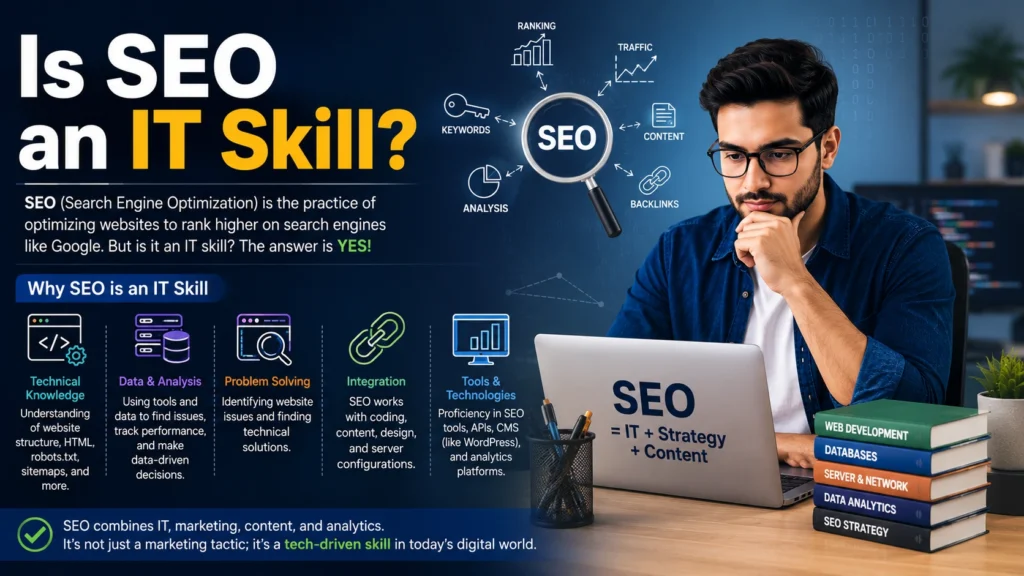
No, SEO is not just an IT skill. It sits at the crossroads of marketing, writing, data, and a little bit of tech. You can learn the basics without ever touching code.
That said, this question comes up a lot in career forums and job boards. Many people asking is SEO an IT skill want a straight answer before they commit their time. Here it is: SEO uses some technical know-how, but it leans just as hard on strategy and content.
What Is SEO?
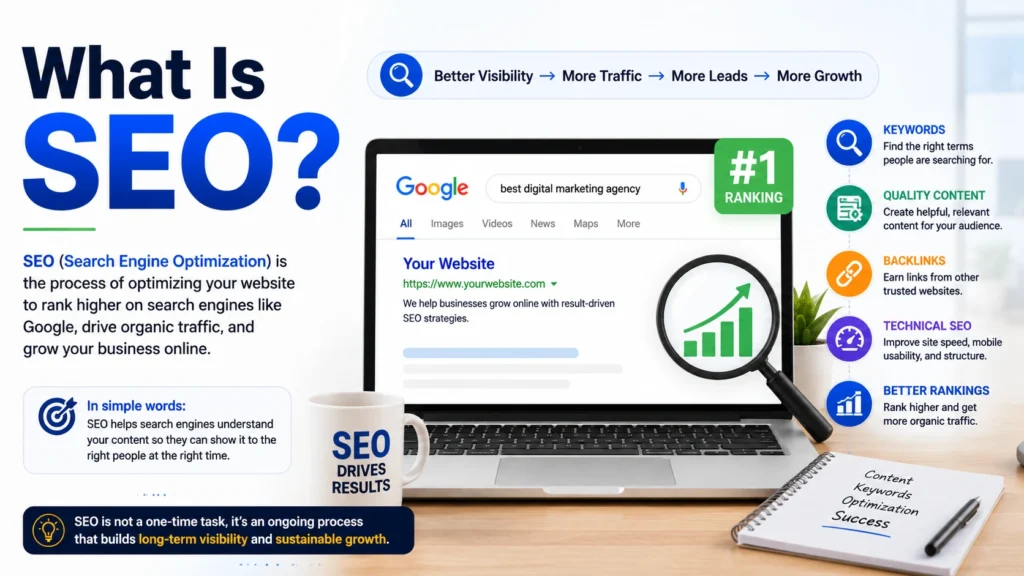
SEO stands for search engine optimization. It’s the practice of helping a website show up higher on Google and other search engines.
It covers a mix of things. You research keywords people actually type into search bars. You write content that answers their questions. You fix technical issues that stop search engines from reading your site properly. You build trust through links and reputation.
None of these tasks live in one single department. That’s the first clue that SEO doesn’t belong only to IT.
Is SEO Considered an IT Skill?
This is where most beginners get stuck. Is SEO an IT Skill? In a narrow sense, yes, part of it is. Technical SEO work like fixing site speed, cleaning up broken links, or editing a robots.txt file does require some IT knowledge.
But that’s only one piece of a much bigger picture. Most SEO work happens outside of IT departments. Marketing teams handle keyword research. Writers create the content. Analysts study search data. So when people ask is SEO a technical skill, the honest answer is: partly, but not fully.
Think of SEO as a skill set that borrows from several fields. It’s closer to a hybrid role than a strict IT job.
Why SEO Is More Than Just an IT Skill
Search engines don’t just look at code. They look at how helpful your content is to real people. Google’s December 2025 core update made this even clearer.
That update pushed harder on rewarding pages written with genuine experience and expertise, not just pages built with clean code. Sites that had strong, well-researched content moved up. Sites with thin, generic pages lost visibility, even if their technical setup was flawless.
This shows why is SEO an IT Skill can’t be answered with a flat yes. A perfectly coded website with weak content still won’t rank well. SEO needs technical care and strong content working side by side.
What Technical Skills Do SEO Professionals Need?
Some technical knowledge does help. You don’t need to be a developer, but a few skills go a long way.
- Basic HTML and CSS, enough to spot and fix small errors
- Understanding of site speed and how to improve it
- Familiarity with tools like Google Search Console and Google Analytics
- Knowledge of how search engines crawl and index pages
- Comfort with schema markup for rich results
Many beginners ask do you need coding for SEO before they start. The short answer is no, not deep coding. You should be able to read code and make small edits. Writing full applications is not part of the job.
Some SEO professionals also learn a bit of Python or Google Sheets scripting to handle large data sets faster. This isn’t required, but it saves time once you handle bigger websites with thousands of pages. Even without this skill, you can still do the job well using free tools and templates built for non-developers.
How Google’s E-E-A-T Focus Changes What Skills Matter
Google’s recent updates, including the December 2025 core update, put more weight on E-E-A-T. That stands for experience, expertise, authority, and trust.
This shift changes what makes a good SEO professional. It’s no longer enough to fix technical errors and place keywords in the right spots. You need to show real experience behind your content. That could mean adding author bios, citing credible sources, or sharing first-hand insights instead of generic advice.
For anyone trying to rank in Google’s AI Overviews or other AI-driven search results, this matters even more. These systems tend to pull from content that clearly shows who wrote it and why they’re qualified to write it. A strong SEO strategy today blends technical fixes with visible proof of expertise on every page.
What Non-Technical Skills Are Important in SEO?
This is the part people often overlook. SEO also asks for skills that have nothing to do with computers.
Strong writing matters. You need to explain ideas clearly and keep readers interested. Research skills matter too. You have to dig into what your audience actually searches for and why.
Analytical thinking helps you read reports and spot patterns. Communication skills help you explain your strategy to clients or managers who may not know SEO at all. Patience matters as well, since rankings take time to shift.
If you’re building a list of SEO skills for beginners, put writing, research, and analysis at the top. Technical skills come later, once you understand the basics.
Do You Need an IT Background to Learn SEO?
No, you don’t need an IT background to learn SEO. Plenty of successful SEO professionals started in marketing, journalism, or customer service.
This connects back to the core question, is SEO an IT Skill? If it were purely technical, only IT graduates could succeed at it. That’s not what happens in the real industry. People from non-technical backgrounds often do very well because they focus on user intent and clear communication.
A basic comfort with computers and a willingness to learn new tools is enough to start. The rest comes with practice.
Career Opportunities in SEO
SEO offers a wide range of career paths. You can work as an in-house SEO specialist for one company, or as a consultant serving several clients at once.
Content-focused roles include SEO content writer and content strategist. Technical roles include technical SEO specialist and SEO developer. There’s also room for SEO analysts, link building specialists, and local SEO experts who help small businesses show up in local search.
Understanding technical SEO vs digital marketing helps here. Technical SEO focuses on the backend health of a website. Digital marketing SEO focuses on strategy, content, and growth. Many professionals blend both, but you can build a career leaning toward either side.
Freelance work is common in this field too. Many SEO professionals take on multiple clients at once, working from home or a shared office. Agencies also hire SEO specialists at different levels, from entry-level assistants to senior strategists who manage full teams. Salaries tend to grow with proven results, since clients care most about ranking improvements and traffic growth rather than job titles alone.
How to Start Learning SEO
Starting out doesn’t require a big investment. Begin with free resources like Google’s own SEO guide and Search Console help pages. Read case studies from real websites. Practice on a small blog or personal site.
Once you understand the basics, structured learning speeds things up. If you’re searching for SEO courses in Rawalpindi, Localpro 1 Institute offers hands-on training that covers both the technical and content sides of SEO. Learning from people who already work in the field helps you avoid common early mistakes.
Set small goals as you learn. Try improving one page’s speed. Try writing one piece of content around a real keyword. Small wins build real skill over time.
Common Myths About SEO
A few myths keep floating around and they confuse beginners.
Myth one: SEO is only about keywords. Keywords matter, but content quality and user experience matter more now.
Myth two: SEO is a one-time task. It’s ongoing work, since search engines and competitors keep changing.
Myth three: Is SEO an IT Skill? Some think it’s purely technical work for developers. As covered above, that’s not accurate. SEO blends technical care with content strategy.
Myth four: More links always mean better rankings. Quality and relevance count far more than sheer quantity.
Conclusion
So, is SEO an IT skill? Not entirely. It borrows some technical tools, but it relies just as much on writing, research, and strategy. Anyone willing to learn, regardless of background, can build a strong career in this field. Focus on both the technical and creative sides, and you’ll see steady progress.
If you’re ready to build practical SEO skills or need expert guidance, contact us today. At Localpro 1 Institute, we’re here to help you learn SEO the right way or support your business with professional SEO solutions.
FAQs
Is SEO an IT skill?
Not fully. SEO includes some technical tasks, but it also needs content, strategy, and analytical thinking.
Is SEO a technical skill?
Part of it is technical, like fixing site speed or crawl errors. Most of the work involves content and research.
Do you need coding for SEO?
No deep coding is required. Basic knowledge of HTML helps, but you won’t need to build software.
What are good SEO skills for beginners to learn first?
Start with keyword research, basic writing skills, and understanding how search engines rank pages.
What is the difference between technical SEO vs digital marketing?
Technical SEO deals with a website’s backend health. Digital marketing SEO focuses on content, strategy, and audience growth.
Can someone without an IT background succeed in SEO?
Yes. Many successful SEO professionals come from marketing, writing, or customer-facing roles rather than IT.