
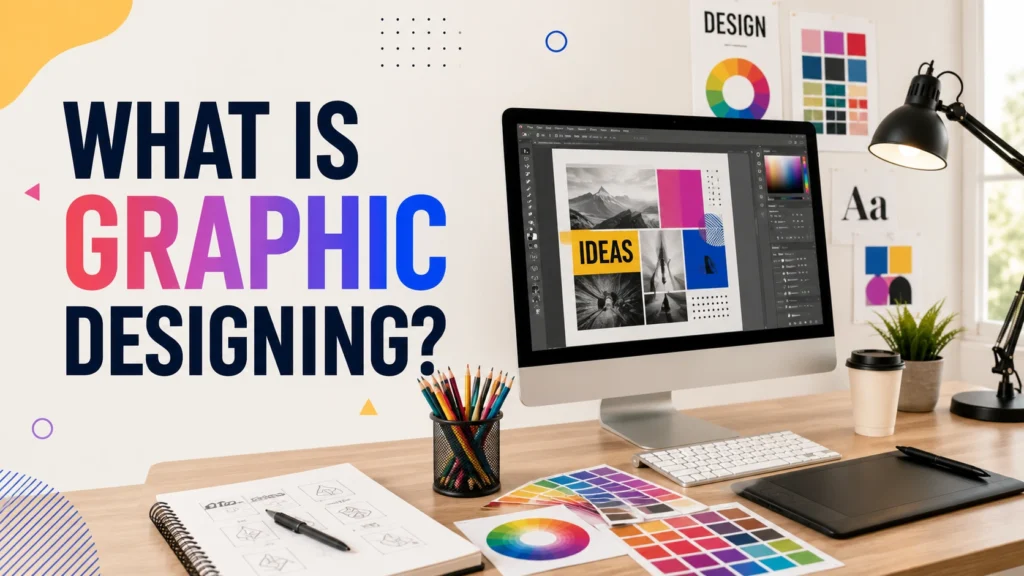
Graphic designing is the craft of mixing images, text, and color to send a clear message. It turns plain words into visuals people actually stop and look at. Every logo, poster, and app icon started as a small design project on someone’s screen. This one skill shapes how brands look on your phone and in stores.
So, what is graphic designing at its core? It is the process of solving a communication problem with shapes, fonts, and color choices. Anyone can learn it with steady practice.
What Is Graphic Designing?
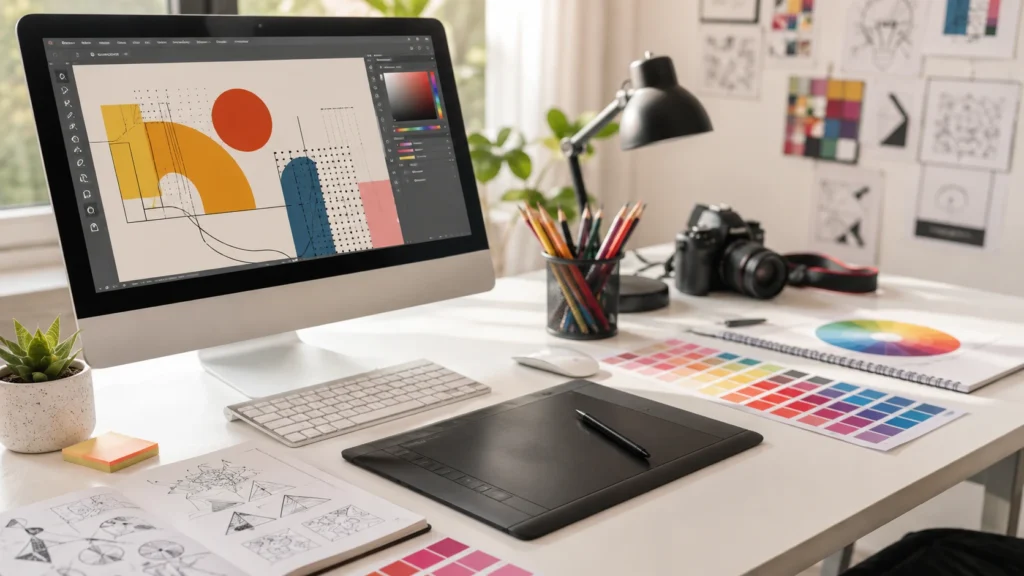
Let’s break it down in plain terms. Graphic designing means using visual elements like layout, typography, imagery, and color to share an idea or sell a product. It sits at the meeting point of art and business.
A designer doesn’t just make things look nice. They decide what a viewer notices first, second, and third. That order affects whether a person reads a flyer, clicks a button, or scrolls past an ad without a second glance.
This is also known as what is graphic design in simple terms: turning a message into a picture that people understand in seconds. A good design answers a question before the viewer even asks it. A weak one leaves them confused or bored.
Graphic designing covers print work like brochures and packaging. It also covers digital work like website banners, social media posts, and mobile app screens. The tools have changed over the years, but the goal stays the same. Make a message clear, and make it memorable.
What Does a Graphic Designer Do?
A graphic designer takes a brief from a client or a team and turns it into a finished visual. This might be a business card, a billboard, or a full brand kit with logos and color rules.
Day to day work includes sketching ideas, picking fonts, choosing colors, and building layouts in design software. Designers also test different versions to see which one communicates best. They talk with clients, take feedback, and revise the work until it fits the goal.
Many designers also handle small technical tasks. This includes resizing images for different screens, preparing files for printing, and checking that colors look right on paper and on screens. The job blends creative thinking with practical file management.
Types of Graphic Designing
There are several types of graphic design, and most designers pick one or two areas to focus on.
Brand identity design covers logos, color palettes, and fonts that make a company recognizable.
Print design includes flyers, brochures, packaging, and business cards. Even with so much online work today, print design still matters for local shops and events.
Web and UI design deals with how a website or app looks and feels. This overlaps with user experience work, since a designer must think about how people click and scroll.
Motion graphics brings design into video. Think of animated logos, title screens, or short social media clips.
Illustration-based design uses hand drawn or digital art instead of photos. This style shows up in children’s books, game art, and quirky brand campaigns.
Publication design shapes magazines, newspapers, and books, focusing on how text and images sit together across many pages.
Each type needs its own skill set, but they all share the same basic design rules.
Essential Graphic Design Principles
Good design follows a small set of rules that rarely change, even as software does.
Balance means arranging elements so no single part feels too heavy or too light on the page. Contrast helps important text or images stand out from the background.
Alignment keeps everything lined up neatly instead of scattered, which makes a design feel put together. Repetition uses the same colors, fonts, or shapes across a project so it feels connected.
White space is the empty area around elements. Beginners often fear empty space and fill every inch, but blank space actually helps a viewer’s eyes rest and focus.
Hierarchy guides the eye from the most important part of a design to the least important. Get these six ideas right, and most designs will already look far better than average.
Popular Graphic Design Software
Adobe Photoshop remains a top pick for editing photos and building layered designs. Adobe Illustrator handles vector graphics, which is ideal for logos and icons that need to scale without losing quality.
Adobe InDesign is built for longer documents like brochures, magazines, and books. Canva has grown fast because it is simple, browser based, and friendly to beginners who don’t want to learn complex tools right away.
Figma has become the standard for web and app design teams, since many people can edit the same file at once. CorelDRAW and Affinity Designer are solid, budget friendly alternatives to Adobe’s tools.
None of these programs make someone a designer on their own. They are simply the brushes. The thinking behind the design still matters more than the software used to build it.
Skills Required to Become a Graphic Designer
Strong design work rests on a mix of creative and technical skills.
On the creative side, a designer needs a good eye for color, spacing, and typography. Understanding how people read and scan a page also helps a lot. On the technical side, comfort with design software is a must, along with basic knowledge of file formats and print or screen requirements. Communication skills matter too, since designers explain their choices to clients who may not know design terms.
This mix is exactly why graphic design for beginners can feel tricky at first. It’s not just about art skill. It’s about learning software, client habits, and design theory all at once. Patience and steady practice close that gap over time.
Where Is Graphic Designing Used?
Graphic designing shows up almost everywhere you look. Product packaging on store shelves, road signs, restaurant menus, and clothing labels all rely on it.
Online, it shapes website layouts, social media graphics, email newsletters, and video thumbnails. Businesses use it for advertisements, presentations, and reports that need to look trustworthy.
Even government agencies and schools use graphic design for signage, forms, and public notices. Wherever a message needs to reach people quickly, design is doing the work behind the scenes.
Benefits of Learning Graphic Designing
Learning this skill opens doors beyond a single job title. It sharpens your visual judgment, which helps in marketing, teaching, and even running your own small business.
Freelance work is easy to find once you build a portfolio, since businesses of every size need visuals. The skill also pairs well with other fields like photography, video editing, and content writing.
Beyond money, many people enjoy design because it gives a creative outlet with a clear, useful result at the end. You make something, and other people actually use it.
Career Opportunities in Graphic Designing
Job titles in this field include graphic designer, brand designer, UI designer, packaging designer, and art director. Agencies, in-house marketing teams, and print shops all hire for these roles.
Freelancing is another strong path. Many designers build a client base through platforms like Fiverr, Upwork, or their own referrals. Some move into teaching design once they gain enough experience.
Salaries vary by city, experience, and specialty, but design work stays in steady demand since every business needs some form of visual communication.
Is Graphic Designing a Good Career?
Yes, for the right person. It suits people who enjoy creative problem solving and don’t mind revising work based on feedback. It also rewards people who keep learning new software and trends.
It may not suit someone who wants a fixed routine with little client interaction. Freelance design especially demands comfort with unpredictable income, at least in the early years.
Overall, demand for design work remains steady across print, web, and branding, which makes it a reasonably safe skill to build.
How to Start Learning Graphic Designing
Start with the basics: color theory, typography, and layout. Free tutorials and YouTube channels can teach the fundamentals before you spend money on paid courses.
Pick one software tool, like Canva or Photoshop, and practice small projects such as social media posts or simple posters. Build a portfolio early, even with practice projects, since this is what clients and employers actually look at.
If you want structured, hands-on training, Graphic Designing courses in Rawalpindi at Localpro1 Institute cover software skills, design theory, and portfolio building under proper guidance. Structured classes can save months of trial and error compared to learning everything alone.
Common Mistakes Beginners Make in Graphic Designing
New designers often use too many fonts in one project, which makes a design feel messy. Sticking to two or three fonts usually looks cleaner. Overcrowding a page with too much text or too many images is another common issue. Leaving some empty space almost always improves a layout.
Ignoring color contrast is a frequent mistake too, since low contrast text is hard to read on many screens. Beginners also tend to copy trends without understanding why they work, which leads to designs that feel random instead of purposeful.
Graphic Designing vs Graphic Design
These two terms mean the same thing in daily use. “Graphic design” is the more common, formal term used in job titles and industry writing. “Graphic designing” is often used casually to describe the activity itself, similar to saying cooking instead of cookery.
So when someone searches What Is Graphic Designing?, they usually want the same answer as someone searching for graphic design basics. Don’t worry about picking the “correct” phrase. Focus on understanding the actual skill instead.
Conclusion
Graphic designing blends art, strategy, and technical skill to turn simple ideas into visuals that people notice and remember. Whether you want a hobby, a side income, or a full-time career, the fundamentals remain the same. Learn the core design principles, practise with industry-standard software, and build a portfolio one project at a time.
That’s what graphic designing is all about at its core. If you’re ready to start your journey, contact us today and discover how Localpro1 Institute can help you build the skills needed for a successful career in graphic design.
FAQs
What is graphic designing in simple words?
It’s the skill of using images, text, and color to share a message clearly.
Is graphic designing hard to learn?
The basics are simple to pick up, but mastering software and design theory takes regular practice over months.
What software do beginners need first?
Canva is a friendly starting point. Photoshop and Illustrator are worth learning once you’re comfortable with basic design ideas.
Can I become a graphic designer without a degree?
Yes. Many designers build careers through self-study, online courses, or short structured programs, backed by a strong portfolio.
How long does it take to learn graphic designing?
Basic skills can form in a few months of steady practice. Reaching a professional level usually takes a year or more of real project work.