
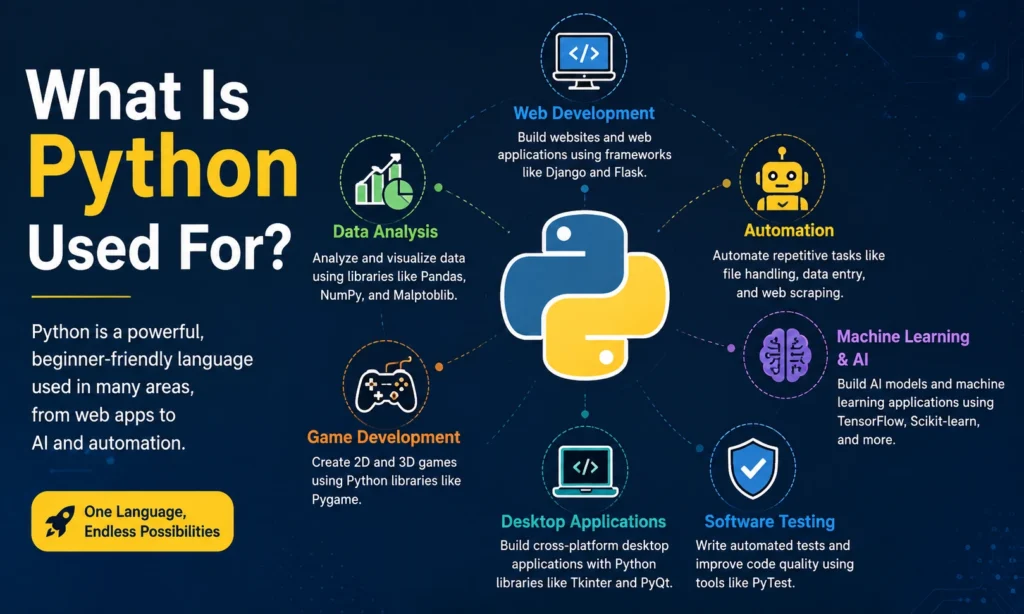
Python powers everything from simple scripts to massive AI models running in the cloud. It’s one of the easiest languages to pick up, yet strong enough to run apps used by billions of people every day. Companies like Google, Netflix, and Instagram build core parts of their systems with it.
So, what is Python used for exactly? You’ll find it in web development, data science, automation, and machine learning. This guide breaks down every major use case in plain language.
What Is Python Used For?
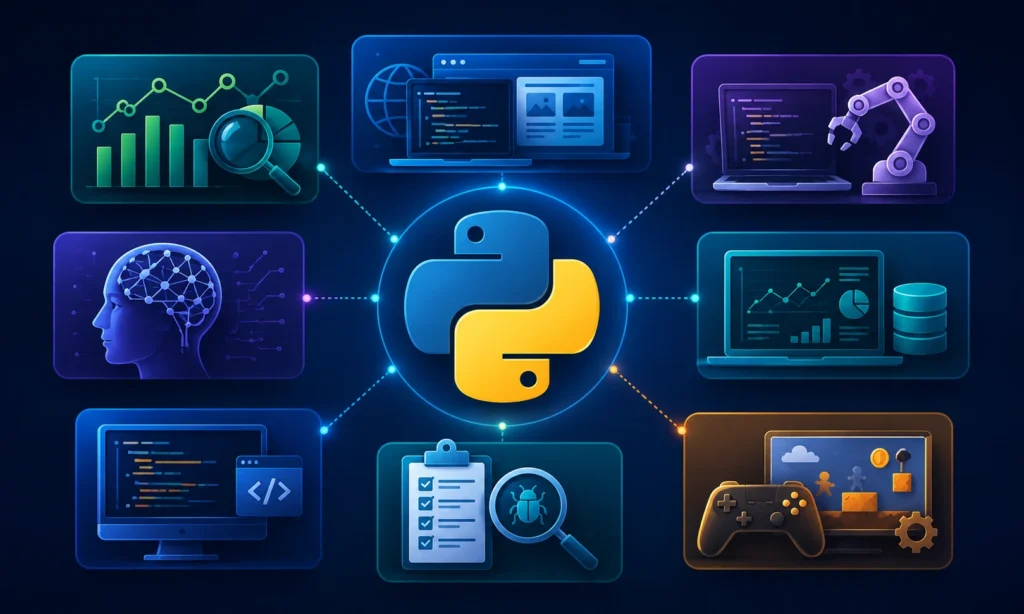
If you want a quick answer: Python is used to build websites, analyze data, automate boring tasks, train AI models, and create desktop and mobile apps. It’s a general-purpose language, which means it isn’t locked into one job.
That flexibility is exactly why so many beginners and professionals ask what Python is used for before picking a language to learn. Unlike some languages built for one narrow purpose, Python adapts to almost any project you throw at it. A student can use it to build a to-do list app. A data scientist can use the same language to train a neural network. Both jobs use different tools within Python, but the core language stays the same.
10 Common Uses of Python
Here are the most common uses of Python programming today, based on how companies and developers actually use it.
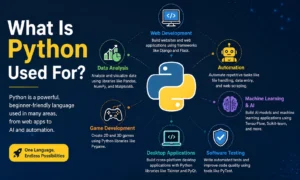
- Web development. Frameworks like Django and Flask let developers build full websites fast. Instagram and Pinterest both run parts of their platforms on Django.
- Data analysis. Libraries like Pandas and NumPy make it simple to clean, sort, and study large sets of data. Analysts use Python to spot trends that would take hours to find by hand.
- Machine learning and AI. Tools like TensorFlow and PyTorch are built on Python. Most AI research papers include Python code because the language handles complex math without extra clutter.
- Automation and scripting. Python scripts can rename thousands of files, scrape websites, or send automatic emails. Office workers use it to cut down repetitive tasks.
- Software testing. QA teams use Python to write test scripts that check if new code breaks anything before it goes live.
- Game development. Libraries like Pygame let developers build simple 2D games. It’s not the top choice for big-budget games, but it works well for prototypes and indie titles.
- Desktop applications. Tools like Tkinter and PyQt help build software with buttons, menus, and windows, the kind of programs you open on your laptop every day.
- Scientific computing. Universities and research labs use Python for simulations, physics models, and lab data processing. NASA has used it for mission analysis tools.
- Cybersecurity. Security experts write Python scripts to scan networks, test for weak spots, and automate security checks.
- Finance and trading. Banks and trading firms use Python to build models that predict stock movement and manage risk.
These ten points cover the main applications of Python, but new use cases show up every year as the language keeps growing.
Why Is Python Used So Widely?
Three reasons explain most of it: simple syntax, a huge library ecosystem, and strong community support.
Python code reads almost like plain English. A beginner can understand a basic script without knowing much about programming at all. This cuts the learning curve compared to languages like C++ or Java.
The second reason is the library ecosystem. Instead of writing code from scratch, developers pull in ready-made tools for almost any task, whether that’s building a website or training an AI model.
The third reason is community size. Python has one of the largest developer communities in the world. According to the Stack Overflow Developer Survey, Python consistently ranks among the most used and most loved languages by working developers. A big community means more tutorials, more forum answers, and faster fixes when something breaks.
Is Python Good for Beginners?
Yes. Python is often the first language taught in coding bootcamps and computer science courses because it removes a lot of the confusing syntax found in other languages. You don’t need semicolons at the end of every line. You don’t need to declare variable types before using them. This lets new learners focus on logic instead of memorizing rules.
Most beginners can write a working program within their first week of learning Python. That quick win keeps motivation high, which matters more than people think when starting a new skill.
If you’re based in Pakistan and want structured, hands-on training instead of scattered YouTube tutorials, LocalPro1 Institute offers python courses in Rawalpindi that walk you through real projects step by step. Learning with guidance from an instructor tends to save weeks compared to self-teaching alone, especially when you get stuck on an error message at 11 PM with no one to ask.
What Jobs Can You Get With Python?
Python skills open doors across several career paths, not just one narrow job title.
- Data analyst. Works with spreadsheets, databases, and Python libraries to find patterns in business data.
- Machine learning engineer. Builds and trains AI models used in products like recommendation systems and chatbots.
- Backend developer. Builds the server-side logic that powers websites and apps.
- Automation engineer. Writes scripts that handle repetitive tasks inside companies, from IT to finance.
- Data scientist. Combines statistics, coding, and business knowledge to guide company decisions.
- QA engineer. Writes automated tests to catch bugs before software ships.
What Can You Build With Python?
People often ask what Python is used to create once they’ve learned the basics. Here are real examples you can build, even as a beginner:
- A personal budget tracker that reads your bank statement and shows spending by category.
- A web scraper that pulls product prices from online stores and alerts you when they drop.
- A simple chatbot that answers common customer questions.
- A weather app that pulls live data from a public API.
- A basic e-commerce website using Django.
- A file organizer that automatically sorts your downloads folder.
None of these need advanced math or years of experience. They need patience and a willingness to look up errors when your code doesn’t run the first time. It rarely does, for anyone.
Python vs Other Programming Languages
Python isn’t the only language worth learning, so here’s how it compares to a few common alternatives.
Python vs JavaScript. JavaScript runs in web browsers and handles the interactive parts of websites. Python usually works behind the scenes, on servers or in data pipelines. Many developers learn both.
Python vs Java. Java is common in large enterprise systems and Android apps. It runs faster in some cases, but it needs more lines of code to do the same job Python does in fewer lines.
Python vs C++. C++ gives you more control over memory and speed, which matters for game engines and hardware-level programs. Python trades some of that speed for simpler syntax and faster development time.
Python vs R. R was built specifically for statistics. Python can do statistics too, but it also handles web development, automation, and general software work, which makes it more versatile for people who don’t want to learn a second language later.
No single language wins every category. The right choice depends on what you’re building and how much time you have to learn it.
Conclusion
So, what is Python used for in one sentence? It’s used to build websites, analyze data, automate tasks, and power AI systems, all with one beginner-friendly language. Whether you’re switching careers, building a side project, or just curious, Python gives you a practical starting point that keeps paying off as your skills grow. Contact us today to start learning Python and build practical skills for your future.
FAQs
What can Python be used for?
Python can be used for web development, data analysis, automation, machine learning, game development, and software testing. It’s a general-purpose language, so it fits nearly any type of project.
What is Python used to create?
Developers use Python to create websites, mobile app backends, AI models, automation scripts, desktop software, and data analysis tools.
Is Python hard to learn for someone with no coding background?
No. Python’s simple syntax makes it one of the easiest first languages for complete beginners.
How long does it take to learn Python basics?
Most people can learn the basics in four to eight weeks with consistent daily practice, though becoming job-ready takes longer.
Do I need a strong math background to use Python?
Not for most applications. Web development and automation need very little math. Data science and machine learning need more, but you can learn it alongside Python itself.
Is Python still relevant in 2026?
Yes. Python remains one of the top languages used in AI, data science, and backend development, and demand for these skills keeps growing.