


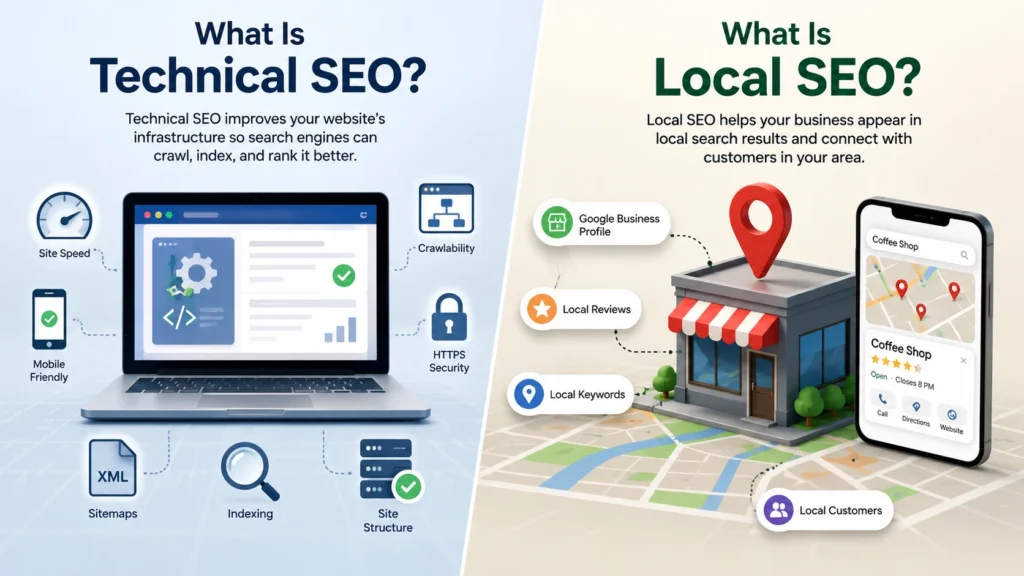
Technical SEO fixes how well Google can crawl, read, and load your site. Local SEO helps your business show up when people search near their city or neighborhood. Both work together to bring you real traffic.
If you want a full answer to What Is Technical SEO and Local SEO?, this guide breaks down both terms in plain words. You will learn the key parts, common mistakes, and the tools that actually help. LocalPro1 Institute has created this guide to help beginners, business owners, and marketers understand both types of SEO and use them to improve their online visibility.
What Is SEO?
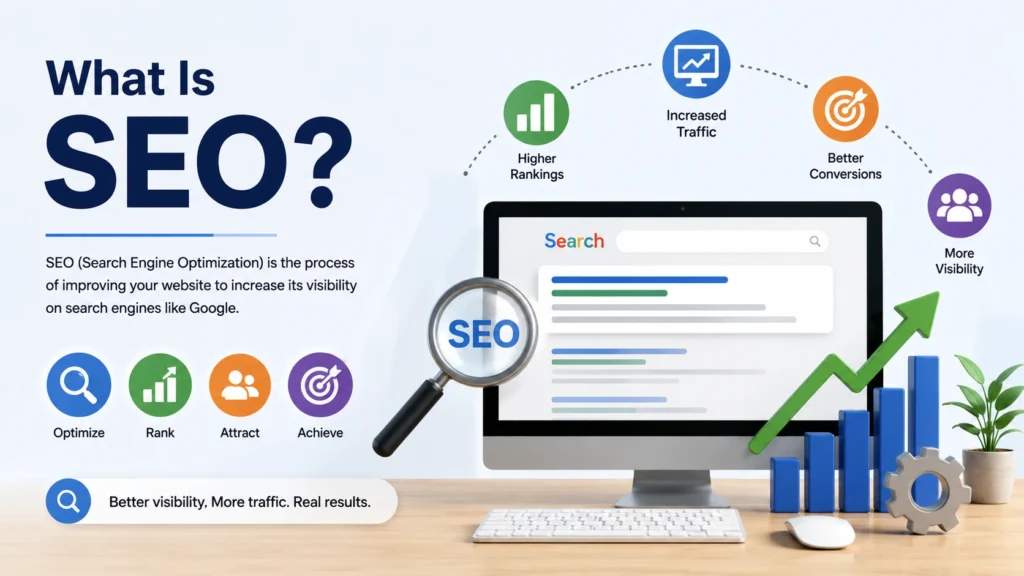
SEO stands for Search Engine Optimization. It is the process of making a website easier to find on Google, Bing, and other search engines.
SEO has many branches. Technical SEO handles the backend of your site. Local SEO handles your presence in nearby searches like “plumber near me” or “best bakery in Rawalpindi.” Content SEO, on-page SEO, and off-page SEO round out the full picture, but this guide focuses on the two that most business owners ask about first.
Google’s search systems now reward sites that answer questions fast, load quickly, and prove real experience. This shift became sharper after Google’s December 2025 core update, which put more weight on page speed, site trust, and content built by people with genuine expertise. Thin pages and rushed AI content lost ground. Sites with clear structure and honest, useful answers gained visibility. That update is a big reason technical soundness and local trust signals matter more today than they did a year ago.
Technical SEO Section
Technical SEO is the foundation your content sits on. Without it, even great writing struggles to rank.
Key Elements of Technical SEO
Site speed. Google tracks how fast your pages load using Core Web Vitals. Pages that load in under 2.5 seconds tend to perform better. Slow pages lose visitors and rankings.
Mobile friendliness. Most searches happen on phones. Google uses mobile-first indexing, which means it looks at your mobile site first when deciding your rank.
Crawlability. Search engines use bots to scan your site. A clean XML sitemap and a correct robots.txt file help these bots find every important page.
Site structure. A logical folder structure and clear internal links help both users and search bots move through your site with ease.
Secure connection (HTTPS). Google flags sites without SSL certificates as unsafe. This can hurt trust and rankings.
Structured data (schema markup). This code tells search engines exactly what your content means. It also helps your pages appear in rich results, like star ratings or FAQ boxes, and it helps AI tools like Google’s AI Overviews pull accurate answers from your page.
Duplicate content control. Canonical tags tell Google which version of a page to index when similar content exists in more than one place.
Common Technical SEO Mistakes to Avoid
- Ignoring broken links and 404 errors
- Using slow, bloated themes or plugins
- Skipping a sitemap submission to Google Search Console
- Blocking important pages in robots.txt by accident
- Running duplicate title tags across many pages
- Forgetting alt text on images
Best Technical SEO Tools
Google Search Console shows crawl errors and indexing issues for free. PageSpeed Insights measures your Core Web Vitals score. Screaming Frog crawls your whole site and flags technical problems. Ahrefs and Semrush both offer full site audits with clear fix lists.
Local SEO Section
Local SEO explained in simple terms: it helps your business appear when someone nearby searches for what you offer. This matters most for shops, clinics, restaurants, and service businesses with a physical location or a set service area.
How Local SEO Works
Google looks at three main things for local results: relevance, distance, and prominence. Relevance means how well your listing matches the search. Distance means how close you are to the searcher. Prominence means how well known and trusted your business is, based on reviews, links, and citations.
When someone searches “dentist near me,” Google checks its Local Pack, which is the map and three-business list that shows up at the top of results. Ranking there brings direct calls and foot traffic.
Key Ranking Factors for Local SEO
- A complete and verified Google Business Profile
- Consistent Name, Address, and Phone number (NAP) across the web
- Positive customer reviews with regular replies from the owner
- Local citations on directories like Yelp and local chambers of commerce
- Location-based keywords in your titles and page content
- Backlinks from other local or regional websites
Best Practices for Local SEO
Claim and fully fill out your Google Business Profile. Add real photos, correct hours, and your exact service area. Ask happy customers for reviews and respond to every one, good or bad. Create a separate page for each city or area you serve, with unique content for each. Add your city name naturally in headers and body text. Build local backlinks through sponsorships, local news, or community events.
Common Local SEO Mistakes
- Leaving business hours or address outdated
- Using the exact same content on every location page
- Ignoring or deleting negative reviews instead of replying
- Missing NAP consistency across directories
- Skipping local keywords in page titles
Technical SEO vs Local SEO (Comparison Table)
| Factor | Technical SEO | Local SEO |
| Main goal | Improve site health and crawlability | Improve visibility in local searches |
| Focus area | Site speed, structure, indexing | Google Business Profile, reviews, citations |
| Best for | All websites | Businesses with a physical or service area |
| Key tools | Search Console, Screaming Frog | Google Business Profile, BrightLocal |
| Ranking signal | Page experience and technical health | Relevance, distance, prominence |
This table sums up the difference between technical SEO and local SEO in one glance. Both are needed, but they solve different problems.
How Technical SEO and Local SEO Work Together
A fast, well-built website gives local pages a better chance to rank. If your site loads slowly or has broken pages, Google may hesitate to show it in local results, even with great reviews. On the other hand, strong technical SEO without any local signals will not help a nearby customer find your store.
Think of technical SEO as the engine and local SEO as the direction. One makes the site run well. The other points it toward the right audience. A local bakery with a fast, mobile-friendly site and a complete Google Business Profile will almost always beat a competitor who only has one of the two in place.
This is exactly what we teach hands-on at LocalPro1 Institute. If you want to learn how to apply both strategies to real business websites, our SEO courses in Islamabad cover technical audits, local ranking factors, and live case studies from local businesses.
Which Is More Important: Technical SEO or Local SEO?
Neither one wins alone. Technical SEO explained simply is the base every page needs to be found and read correctly. Local SEO is what turns that visibility into local customers.
If you run a national or global site with no physical location, technical SEO carries more weight. If you run a local shop or service, you need both, since a broken or slow site will quietly block your local rankings even if your Google Business Profile is perfect.
Conclusion
What Is Technical SEO and Local SEO? They are two connected parts of one goal: getting found by the right people at the right time. Technical SEO makes sure your site works well for search engines and users. Local SEO makes sure nearby customers find you first.
Fix the technical side of your site, then build out strong local signals. Do both consistently, and your rankings, online visibility, and foot traffic will grow together. If you want expert guidance, contact us today and learn practical SEO strategies that help businesses succeed.
FAQs
What is the main difference between technical SEO and local SEO?
Technical SEO fixes how a website performs and gets crawled. Local SEO helps a business show up in searches tied to a location.
Do I need local SEO if I already have good technical SEO?
Yes. A fast, well-built site helps, but without local signals like reviews and a Google Business Profile, nearby customers may never find you.
How long does local SEO take to show results?
Most businesses see movement in the Local Pack within 4 to 12 weeks, depending on competition and review activity.
Can a small business handle technical SEO without a developer?
Basic fixes like sitemaps, alt text, and speed checks can be done with tools like Search Console. Bigger issues, like site structure, often need a developer.
Does the Google December 2025 core update affect local businesses?
Yes. The update placed more weight on page experience and genuine expertise, which affects how local business pages are judged alongside their local signals.