

SEO Practically

digital marketing services

Explore professional digital marketing services, including SEO, PPC, social media, content marketing, and web strategies to grow your business online.

Woman at a wooden desk building a WordPress page layout on a monitor, with wireframe sketches in an open notebook.

What Is the Best Way to Learn WordPress?

The best way to learn WordPress is to combine hands-on practice with structured lessons. Start by building a test site, then follow a step by step course that covers themes, plugins, and basic design. This mix helps you remember what you learn because you use it right away. Reading alone won’t teach you WordPress. What Is the Best Way to Learn WordPress? Practice daily, watch real tutorials, and solve small problems as you build websites. For structured, hands-on learning, Localpro 1 Institute offers beginner-friendly WordPress training that helps you build real skills faster. What Is WordPress? WordPress is a content management system. It lets you build and manage a website without writing code from scratch. You add pages, posts, and images through a simple dashboard. Today it powers a huge share of websites online, from small blogs to large business sites. People choose it because it’s flexible. You can build a shop, a portfolio, a news site, or a personal blog with the same tool. WordPress works through three main parts: the dashboard, themes, and plugins. The dashboard is where you write and manage content. Themes control how your site looks. Plugins add extra features, like contact forms or SEO tools. What Is the Best Way to Learn WordPress? There’s no single trick that makes WordPress click overnight. But a few habits speed things up a lot. First, install WordPress on a test site before touching a real one. Most hosting companies offer a one-click install. This gives you a safe space to click around and break things without any risk. Second, follow a WordPress tutorial for beginners that walks through the dashboard step by step. Don’t skip around. Complete each lesson in order so ideas build on each other. Third, build something small right away. A basic “About Me” page or a simple blog post teaches you more than an hour of watching videos. Doing beats watching every time. Fourth, join a community. Forums and Facebook groups full of WordPress users answer questions fast. You’ll see problems other beginners face, which saves you time later. If you keep asking yourself what is the best way to learn WordPress, the honest answer is repetition. Log in daily, even for ten minutes. Small, steady practice beats one long study session a week. Essential WordPress Skills Every Beginner Should Learn You don’t need to master everything at once. Focus on these core skills first: Installing WordPress through your hosting account or a one-click installer Choosing and customizing a theme so your site matches your brand Installing and managing plugins for contact forms, SEO, and security Creating pages and posts using the block editor Basic on-page SEO, like titles, meta descriptions, and image alt text Site backups and updates to keep your site safe and running smoothly Basic troubleshooting, like fixing a broken plugin or a white screen error Once these feel natural, you can move on to more advanced topics like custom code snippets or page builders. Best Free Resources to Learn WordPress You can learn WordPress for free before spending a single dollar. Here are solid places to start: WordPress.org Documentation covers every core feature in plain language. It’s written by the people who build the software, so it stays accurate and current. YouTube channels dedicated to WordPress walk you through real projects. Watching someone build a live site helps concepts stick better than text alone. Learn WordPress, the official learning hub from WordPress.org, offers free lesson plans, workshops, and courses for every skill level. It’s one of the best places to learn WordPress step by step at no cost. WordPress.tv hosts recordings from WordCamps, community events where developers and designers share real tips and case studies. Reddit and Facebook groups let you ask questions and see how other beginners solve the same problems you’re facing. Free resources are enough for most hobby bloggers. If you want to use WordPress for a business or a career, paid training often moves you forward faster. Best Paid WordPress Learning Platforms Paid courses give you structure, expert feedback, and a clear finish line. That structure matters if you learn better with deadlines and guidance. Popular platforms like Udemy and LinkedIn Learning offer video courses on WordPress basics, theme customization, and even WooCommerce for online stores. These courses are affordable and let you learn at your own pace. If you want hands-on training with a real instructor, local institutes offer a more personal option. For example, if you’re searching for WordPress courses in Islamabad, Localpro 1 Institute offers structured, beginner-friendly training that covers everything from installation to building a full website. Learning in person, with direct feedback from a trainer, often helps beginners avoid common mistakes and build real confidence faster. Paid platforms work best when you already know the basics and want to sharpen specific skills, like SEO, page speed, or e-commerce setup. Common Mistakes Beginners Should Avoid Most beginners fall into the same traps. Avoiding these will save you hours of frustration. Installing too many plugins at once. Every plugin adds weight to your site. Start with the essentials and add more only when you need them. Skipping backups. One bad update can break your entire site. Set up automatic backups from day one. Ignoring updates. Outdated themes and plugins are a major security risk. Update your site regularly, but always back up first. Choosing a heavy theme. Flashy themes with too many features often slow your site down. Pick something clean and fast. Copying other sites exactly. Learning from examples is smart, but your site should reflect your own content and goals, not someone else’s design. Giving up too soon. WordPress has a learning curve. The first week feels confusing for almost everyone. Stick with it past that point. How Long Does It Take to Learn WordPress? Most beginners learn the basics in one to two weeks of steady practice. That’s enough time to build a simple site, add pages, and install a plugin or two. Getting comfortable with design, SEO,

What Is the Best Way to Learn WordPress? Read More »
Content Marketing vs Email Marketing

Content Marketing vs Email Marketing | Best ROI Guide

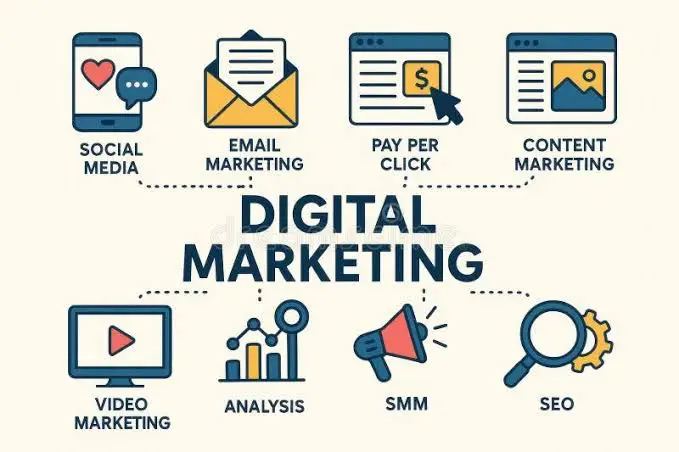
Content marketing builds organic, long-term trust by creating helpful articles, videos, and guides for broad search audiences. Email marketing delivers targeted messages directly to an inbox, giving you a private channel to convert warm leads into sales. Choosing between content marketing vs email marketing comes down to your current growth goals. Content pulls new visitors into your sales funnel, while email converts existing readers into loyal paying customers. What Is Content Marketing? Content marketing is the process of creating and sharing useful media to attract a target audience. Instead of pitching products directly, you offer genuine value that solves real problems. This approach relies on channels that people actively search: Search engines like Google, Bing, and AI search engines Video platforms like YouTube Business blogs and digital publications Educational resource centers and downloadable guides When you publish deep, well-researched pieces, search engines reward your site with higher visibility. Over time, this consistent output turns complete strangers into regular readers who view your brand as a trusted authority. What Is Email Marketing? Email marketing is a direct communication strategy where you send targeted messages straight to a person’s private inbox. Unlike search engine traffic, your email list is an owned asset that algorithms cannot take away. Common forms of email campaigns include: Weekly educational newsletters Automated welcome series for new subscribers Limited-time product discounts and promotions Re-engagement campaigns for inactive leads Because subscribers give explicit permission to receive your emails, this channel generates high engagement. It lets you build one-on-one relationships, share exclusive offers, and guide readers through specific buying decisions. Content Marketing vs Email Marketing Comparison Primary Goal: Content marketing focuses on brand awareness and organic reach. Email marketing focuses on lead conversion and customer retention. Audience Type: Content targets top-of-funnel strangers actively searching for answers. Email targets warm leads who opted in to hear from you. Channel Ownership: Content relies on third-party platforms like Google. Email lists are owned assets you control entirely. Traffic Flow: Content brings inbound visitors to your site. Email pushes direct messages outbound to inboxes. Cost Structure: Content requires up-front investment in writing and research. Email requires minimal ongoing platform fees. Impact Speed: Content builds steady compound growth over 3 to 6 months. Email generates immediate clicks and sales upon sending. Advantages of Content Marketing 1. Drives High-Intent Organic Traffic When people search for solutions online, they want immediate, accurate answers. Publishing detailed articles allows your business to appear right when users need help. Search traffic compounds over time, meaning an article written today can bring qualified visitors to your site for years without extra ad spend. 2. Builds Unshakable Topical Authority Search algorithms reward websites that demonstrate deep hands-on expertise. By thoroughly covering a topic, you signal to both readers and search engines that your business knows the industry inside out. This authority makes it easier for new pages to rank quickly. 3. Educates Buyers Before the Sale Modern buyers prefer doing their own research before talking to a sales representative. Informative guides, comparisons, and teardowns educate prospects on their options. By the time they reach out to your sales team, they already understand your value. Advantages of Email Marketing 1. Direct and Unfiltered Communication Social media posts get buried by feeds, and search algorithms change constantly. Email delivers your message straight to a subscriber’s inbox without competing with third-party rules. You control when your message arrives and how it looks. 2. Exceptional Return on Investment Email consistently delivers some of the highest conversion rates in digital promotion. Since you are talking directly to warm prospects who already trust your brand, pitch messages yield immediate, measurable revenue with low delivery costs. 3. Hyper-Personalized Messaging You can group your email list by user behavior, past purchases, or interest categories. A beginner receives introductory tips, while an advanced user gets high-level insights. Personalization makes your messages feel relevant, leading to higher open and click rates. When Should You Use Content Marketing? Focus your efforts on content creation when you need to grow your top-of-funnel audience. Use this approach if you are facing these situations: Launching a new brand or product line with zero existing audience Wanting to reduce reliance on expensive paid ad campaigns Selling complex services that require customer education Aiming to rank in search results and AI-driven summary answers If nobody knows your business exists yet, content vs email marketing is an easy choice: content must come first because you need visitors before you can collect email addresses. When Should You Use Email Marketing? Shift your priority to email campaigns when you already have site visitors but need to turn them into paying buyers. Choose email promotion for these key goals: Nurturing leads who downloaded a free resource or guide Announcing time-sensitive sales, product updates, or events Onboarding new clients with step-by-step instructions Retaining current clients and driving repeat sales Email provides the controlled environment needed to ask for a sale without feeling intrusive. Can Content Marketing and Email Marketing Work Together? Combining email and content marketing creates a continuous growth loop. Treating them as rivals limits your overall reach, but pairing them creates a seamless marketing funnel. The Inbound Bridge Use content to attract organic search traffic. Place helpful sign-up forms inside your top-performing articles, offering exclusive downloads, cheat sheets, or email courses in exchange for an address. This process turns casual visitors into subscribers. The Distribution Engine Once you publish a piece of original research or a deep-dive article, share it with your list via an email newsletter. This tactic drives instant traffic to your new page, signaling strong user engagement to search crawlers right away. Which Delivers Better ROI? Comparing ROI between these two channels depends on how you measure short-term revenue against long-term asset value. Short-Term View: Email wins on immediate return. Sending a targeted promotion to 10,000 warm subscribers generates fast sales within hours for almost zero extra cost. Long-Term View: Content provides higher cumulative value. One comprehensive article can bring thousands of search visitors every month for

Content Marketing vs Email Marketing | Best ROI Guide Read More »

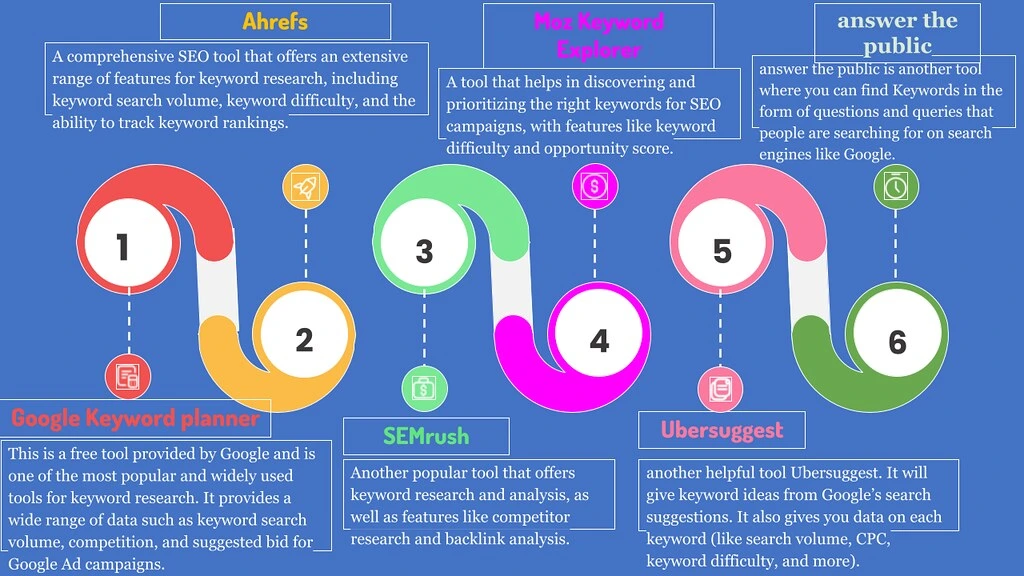
Infographic with a numbered ribbon design showing six popular SEO keyword research tools — Google Keyword Planner, Ahrefs, SEMrush, Moz Keyword Explorer, Ubersuggest, and Answer the Public — each paired with a colored icon and a short description of its features.

What Is the Most Used SEO Tool?

Google Search Console is the most used SEO tool in the world. Every website owner needs it, and it costs nothing to run. Google confirms millions of sites are verified inside it, far more than any paid platform can claim. Among paid tools, Semrush and Ahrefs lead the pack for keyword research and site audits. So what is the most used SEO tool for your specific goals? The answer depends on your budget and what you’re trying to fix. This guide breaks down every option so you can pick the right one. What Is the Most Used SEO Tool? There’s no single tool every marketer agrees on. It depends on how you define “most used.” By total users, Google Search Console wins by a wide margin. It’s free, it’s built into every site’s relationship with Google, and it’s the first tool most beginners open. Site owners use it to check indexing, spot errors, and see which queries bring in clicks. By revenue and paid subscriptions, Semrush takes the lead. Its annual revenue is roughly double that of Ahrefs, and it has built a name across agencies and in-house teams. Ahrefs remains the top choice for backlink research, with an index tracking trillions of links. So the honest answer is this: Google Search Console is the most used SEO tool overall, and Semrush is the most used paid SEO tool. Why Google Search Console Is the Most Common SEO Tool Search Console holds an advantage no paid tool can match. It gets its data straight from Google, not from a crawler guessing at rankings. Here’s what makes it the default choice for most site owners: It’s completely free, with no trial or credit card required. It shows real click and impression data, pulled directly from Google. It flags indexing errors, mobile issues, and manual actions. It reports Core Web Vitals, which affect rankings. It lets you submit sitemaps and request indexing for new pages. The drawback is scope. Search Console only shows data for your own site, not competitor rankings or keyword volume. That’s where paid tools step in. Most Popular Paid SEO Tools Once a business grows past the basics, most teams add at least one paid platform. Here are the ones that show up again and again as the best SEO tools on the market. Semrush is the most widely used all-in-one platform. It handles keyword research, audits, content grading, and competitor tracking in one dashboard, making it one of the best SEO tools for agencies with several clients. Ahrefs built its name on backlink data. Its crawler processes billions of pages daily, and its Content Explorer helps writers find topics that already attract links. It’s also one of the strongest SEO tools for keyword research. Moz Pro was one of the earliest SEO platforms and still holds a loyal user base, thanks to its Domain Authority metric. Screaming Frog is a desktop crawler built for technical audits. It catches broken links, duplicate titles, and missing meta tags. Surfer SEO focuses on content optimization, comparing your draft against top-ranking pages to suggest terms for better topical coverage. How Google’s December 2025 Core Update Changed What “Best” Means Google rolled out its December 2025 core update between December 11 and December 29. It was a broad, system-wide change, not a spam penalty aimed at specific sites. The update reshaped how Google judges content quality across every topic. The biggest shift involved demonstrated experience. A line like “we tested this and it works” no longer carries much weight on its own. Google now looks for details that only come from someone who did the work: exact numbers, unexpected results, and honest trade-offs instead of generic praise. This matters for SEO tool comparisons like this one. A roundup that just lists features copied from a pricing page won’t hold up. Reviews now need real usage, real pricing, and honest downsides. SEO Tools Compared Tool Best For Free Plan Starting Price Google Search Console Site health, indexing, click data Yes, fully free $0 Semrush All-in-one SEO and content marketing Limited trial Around $140/month Ahrefs Backlink research and keyword research Limited free tools Around $130/month Moz Pro Domain Authority tracking, beginner-friendly Limited free tools Around $100/month Screaming Frog Technical site audits Free for 500 URLs Around $259/year Surfer SEO Content scoring and briefs No free plan Around $99/month Pricing changes often, so always check the vendor’s page before buying. What matters more than price is matching the tool to the job you actually need done. Which SEO Tool Is Best for Different Users? Not every website needs the same setup. Here’s a quick breakdown by user type. Beginners and small blog owners should start with Search Console and Google Analytics. Both are free and cover indexing, traffic, and basic keyword data. There’s no reason to pay until the site grows past a few thousand monthly visitors. Freelancers and solo consultants often add Ahrefs or Semrush once they take on paying clients, since one subscription covers research and audits for several sites. Agencies typically run two or three tools together: Semrush or Ahrefs for research, Screaming Frog for crawls, and a rank tracker for client dashboards. E-commerce and large publishers need tools that scale, including log file analysis and enterprise platforms with API access for sites with tens of thousands of pages. Features Every Good SEO Tool Should Have Before you commit to any platform, check that it covers these basics. Accurate keyword data, including search volume and difficulty scores. A site audit feature that flags broken links and slow pages. Competitor tracking, so you can see what’s working in your niche. Rank tracking across desktop and mobile, ideally by location. Backlink monitoring, so you catch toxic links early. Clear reporting you can export or share with clients. A tool missing more than one of these isn’t worth the subscription cost. Free vs Paid SEO Tools Free SEO tools cover the fundamentals well. Search Console, Google Analytics, Google Trends, and Keyword Planner give you

What Is the Most Used SEO Tool? Read More »

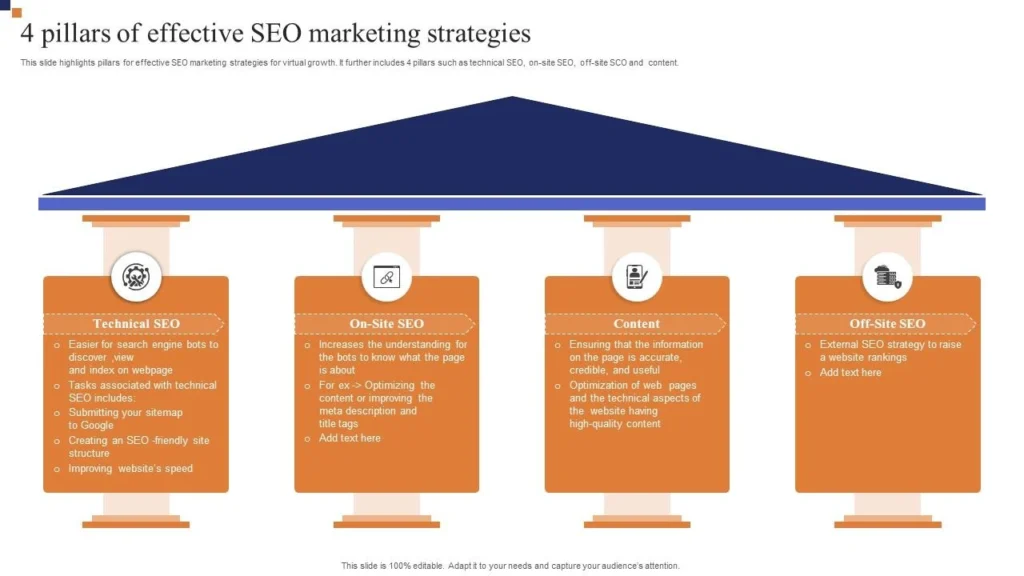
Presentation slide titled "4 pillars of effective SEO marketing strategies" showing a temple/pediment graphic with four orange pillars labeled Technical SEO, On-Site SEO, Content, and Off-Site SEO, each with icons and bullet point descriptions.

What Are the 4 Pillars of SEO?

The 4 pillars of SEO are Technical SEO, On-Page SEO, Off-Page SEO, and Local SEO. Each one solves a different problem. Technical SEO helps Google crawl and read your site. On-page SEO tells Google what a page is about. Off-page SEO builds trust through other sites. Local SEO puts you in front of nearby customers. Google’s December 2025 core update pushed this idea further. Sites with real depth across all four areas held their rankings. Thin, one-sided pages lost ground fast. That is why understanding what are the 4 pillars of SEO matters more now than it did a year ago. What Are the 4 Pillars of SEO? Think of your website as a house. Technical SEO is the foundation. On-page SEO is the layout and furniture inside each room. Off-page SEO is your reputation in the neighborhood. Local SEO is the sign outside your door that tells nearby people you exist. Skip one pillar and the whole structure gets shaky. A site with perfect content but a slow server will still lose rankings. A fast, clean site with weak content will not rank either. Google’s December 2025 update made this balance harder to fake. It rewarded pages that showed real depth, not just one strong area covering for three weak ones. 1. Technical SEO Technical SEO covers everything that helps search engines crawl, index, and render your site. It rarely gets attention because it does not show up in the text on the page. But it decides whether your content even gets a fair chance. Core parts of technical SEO include: Site speed. Google’s own data shows ranking performance starts to slip once Largest Contentful Paint passes about 2.3 seconds. Aim to keep it under 2.5 seconds. Mobile usability. Most searches happen on phones. A page that breaks on mobile loses visitors before they read a word. Crawlability. Clean site architecture, a working XML sitemap, and a correct robots.txt file let Google find your pages. Secure connection (HTTPS). This is a baseline trust signal now, not a bonus. Structured data. Schema markup helps Google and AI systems understand your content faster, which matters for both classic rankings and AI Overviews. If your site fails on these points, nothing else in this article will save your rankings. 2. On-Page SEO On-page SEO is what most people think of first. It covers everything you control directly on a page: titles, headings, body text, images, and internal links. Good on-page SEO in 2026 means writing for the reader first. Google’s helpful content systems check whether a page actually answers the search intent behind a query, not just whether it repeats a keyword. Cover a topic in full. Answer the obvious follow-up questions. Use headings that match how people actually search. A few habits that still work: Put your target keyword in the title, the first paragraph, and one or two subheadings. Use short paragraphs and simple words. Readers scan, they rarely read every line. Add internal links to related pages on your site. This spreads authority and keeps visitors browsing longer. Add outbound links to solid, trustworthy sources when they genuinely help the reader. Use original examples, screenshots, or data instead of copying what competitors already published. This is also where the seo marketing pillars start to overlap. Strong on-page work makes your technical setup and your off-page efforts pay off faster, because Google has something real to rank. 3. Off-Page SEO Off-page SEO is anything that builds your site’s reputation outside your own pages. Backlinks are the biggest piece, but they are not the only one. Google trusts sites that other trustworthy sites vouch for. A link from a respected industry blog carries far more weight than ten links from low-quality directories. After the December 2025 core update, domain trust became an even bigger factor in how sites held their rankings during the shakeup. Ways to build this pillar without spammy tactics: Earn links through original research, case studies, or genuinely useful tools. Get listed in credible industry directories and associations. Build relationships with other site owners in your niche. Encourage brand mentions, reviews, and social proof, even when they are not direct links. Off-page SEO takes longer to build than on-page changes. It rewards patience and real relationships over shortcuts. 4. Local SEO Local SEO matters most for businesses that serve a specific city or region. It focuses on showing up in local search results and on Google Maps. Key parts of local SEO include: A complete, accurate Google Business Profile. Consistent business name, address, and phone number across the web. Local reviews, since they influence both rankings and trust. Location-specific content that speaks directly to the area you serve. Businesses that combine local SEO with the other three pillars tend to dominate their local market, since they show up both in local packs and in general organic results. How the 4 Pillars of SEO Work Together None of these pillars works well alone. A technically fast site with no useful content will not hold traffic. Great content on a slow, broken site will not get crawled properly. Strong backlinks pointing to a thin page will not convert visitors into customers. Google’s ranking systems now compare pages against each other on overall quality, not against a fixed checklist. A page that scores well across all four pillars of seo has a real edge over one that only nails a single area. This is the core reason the “4 pillars” framing has held up so well through recent core updates. 4 Pillars of SEO vs Other SEO Frameworks Some marketers talk about “three pillars of seo” instead, usually grouping technical and on-page SEO together as one category. Others split SEO into five or six categories, adding content strategy or user experience as separate pieces. The four-pillar model works well because it maps to four different skill sets and four different teams inside most companies: developers, writers, outreach specialists, and local marketing staff. Whichever framework you use, the underlying tasks stay

What Are the 4 Pillars of SEO? Read More »

how to earn money online in pakistan

How to Earn Money Online in Pakistan | The 2026 Strategy

Making money online from home is a highly practical way to build financial independence. You do not need an office or corporate backing to build a sustainable monthly income using the internet. If you are trying to learn how to earn money online in Pakistan, the process requires real skills and patience. Success relies on finding verified pathways that match your talents and dedicating consistent daily effort to them. Why Online Earning Is Growing in Pakistan Pakistan now ranks among the top freelancing countries in the world. Cheap internet packages and a young population drive most of this growth. Millions of people under 30 are looking for flexible income outside traditional jobs. Global platforms like Upwork and Fiverr also pay in dollars. That exchange rate advantage makes online income more valuable for Pakistani earners compared to local salaries. A single freelance project can sometimes pay more than a full month at a local job. Remote work culture has grown worldwide too. Companies abroad now hire skilled Pakistani workers for tasks that used to require an in-house team. This shift opened doors for writers, designers, developers, and marketers across the country. What You Need Before You Start Earning Online You do not need an expensive setup to begin your remote career. However, a few basic tools are mandatory to avoid technical interruptions while working for global clients. A Reliable Computer: A basic laptop with decent processing power and battery backup is perfect for most digital tasks. Stable Internet Connection: A backup internet option, like a 4G data device, ensures you never miss a deadline during a power outage. A Dedicated Workspace: A quiet corner in your home helps you focus and stay productive during long working hours. Digital Payment Accounts: You need a way to receive international funds. Setting up a Payoneer account, a digital wallet, or a freelancing bank account with a local bank is essential. How to Start Earning Money Online (Step-by-Step) Starting without a plan leads to confusion and wasted time. Following a structured roadmap protects you from unverified platforms and helps you secure your first paid task quickly. Step 1: Identify Your Core Skill Do not try to learn everything at once. Pick one specific area that interests you, such as writing, graphic design, basic coding, or video editing. Focus entirely on mastering that single skill. Step 2: Build a Portfolio Before clients hire you, they want to see your past work. Create three to five sample projects that showcase your abilities. You can host these samples on free platforms like GitHub, Behance, or a personal portfolio blog. Step 3: Create Professional Profiles Set up clean, optimized profiles on major freelance marketplaces. Use a clear profile picture, write a direct bio explaining how you can help clients, and link your portfolio samples. Step 4: Apply for Gigs Daily Spend time every day sending tailored proposals to clients. Focus on explaining how your specific skill can solve their business problem instead of using a generic copy-paste message. You can read about: Is digital marketing a good career Best Ways to Earn Money Online in Pakistan There’s no single best way to earn money. The right path depends on your skills, time, and goals. Here are the most reliable options right now. Freelancing Freelancing remains the most popular way to earn money online in Pakistan. Common freelance skills include content writing, graphic design, web development, and virtual assistance. Platforms like Upwork, Fiverr, and Freelancer connect you directly with international clients. Payments usually arrive through Payoneer, which supports withdrawals to local Pakistani bank accounts. Beginners often start with smaller projects around $5 to $20. Experienced freelancers with strong portfolios can charge $30 to $100 per hour, depending on their specialty. Blogging Blogging takes longer to earn money but builds long-term, passive income. You pick a topic you understand well, write helpful content, and grow traffic through search engines. Once your blog gets steady visitors, you can earn through Google AdSense, sponsored posts, or affiliate links. Most bloggers don’t see real income until six months to a year in, so this path suits people willing to wait. YouTube YouTube works similarly to blogging but uses video instead of written content. Tutorials, reviews, vlogs, and educational content all perform well with Pakistani audiences. Monetization comes from ad revenue through the YouTube Partner Program, along with sponsorships once your channel grows. Consistency matters more than perfect video quality when you’re starting out. Affiliate Marketing Affiliate marketing means promoting other companies’ products and earning a commission on each sale. You share a unique link through your blog, YouTube channel, or social media. Amazon Associates, Daraz affiliate programs, and various software companies all offer affiliate options. This works best when paired with an existing audience, like a blog or social media following. Selling Products Online E-commerce has grown fast in Pakistan through platforms like Daraz. You can sell physical products, print-on-demand items, or even handmade goods without a physical store. Dropshipping is another popular option, where you sell products without holding inventory yourself. A supplier ships directly to your customer once an order comes in. Social Media Management Businesses need help managing their Instagram, Facebook, and TikTok accounts. If you understand content planning and basic design tools like Canva, this can turn into steady monthly income. Many social media managers work with three to five clients at once, charging a flat monthly rate for content creation and posting. Online Teaching & Digital Products If you’re skilled in a subject, teaching online through platforms like Udemy or your own website can generate steady income. Digital products like ebooks, templates, and courses sell repeatedly without extra work once created. This path takes upfront effort but pays off long term, since one product can sell to hundreds of buyers without additional time investment. AI-Based Online Earning Opportunities AI tools have opened new income paths recently. People now earn by offering AI content editing, prompt writing, chatbot setup, and AI-assisted design services to small businesses. Freelancers who learn

How to Earn Money Online in Pakistan | The 2026 Strategy Read More »

An open hand holding a glowing digital AI chip interface with a "ChatGPT" speech bubble and "Command Prompt" search bar, surrounded by futuristic tech graphics like connection status, config settings, and data readouts, symbolizing AI-powered technology.

Can ChatGPT Do SEO? What It Can and Can’t Do in 2026

Yes, ChatGPT can help with SEO, but it can’t run your whole strategy alone. It writes drafts, suggests keywords, and builds schema fast. It can’t check real search volume, read your analytics, or understand your brand the way a person does. So can ChatGPT do SEO on its own? Not fully. Google’s December 2025 core update pushed harder on real experience and human judgment. Pair the tool with a person who checks its work, and it becomes genuinely useful. What Is ChatGPT? ChatGPT is an AI chatbot built by OpenAI. It generates text by predicting the next word based on patterns learned from massive amounts of training data. You type a question or task, and it responds in seconds. It can write, summarize, brainstorm, and even generate code or structured data like schema markup. It doesn’t browse the internet like Google does, unless you’re using a version with search built in. Even then, it works differently than a search engine designed to rank pages by relevance and trust. Can ChatGPT Do SEO? The short answer is yes, with limits. ChatGPT handles the repetitive, structural parts of SEO well. It struggles with anything that needs live data, verified facts, or real world experience. Think of it like hiring a fast, capable assistant who has read almost everything but has never run a business. It can draft a plan. It can’t tell you if that plan matches what your specific audience actually searches for, unless you feed it real data first. If you want to actually understand how these pieces fit together instead of guessing, structured training helps. Localpro 1 Institute runs practical SEO courses Islamabad learners can join to build real skills alongside AI tools, not instead of them. What Google’s December 2025 Core Update Means for AI-Assisted Content Google’s December 2025 core update raised the bar on E-E-A-T, which stands for Experience, Expertise, Authoritativeness, and Trust. This matters directly for anyone asking can AI help with SEO content creation. Google’s systems got better at spotting content that reads as generic or recycled, a common problem with unedited AI output. Pages that showed real experience, specific examples, and clear expertise held their rankings better than pages that read like a summary of other summaries. Page experience factors like loading speed and mobile usability also carried more weight. Behavioral signals, like how long users stayed on a page, became a bigger part of the equation too. The lesson for anyone using ChatGPT for SEO content is simple. Use it to draft faster, then add the real experience, data, and voice that only a human can bring. What SEO Tasks Can ChatGPT Handle? ChatGPT is genuinely strong at several SEO tasks when you give it clear instructions. Keyword brainstorming. It can generate long lists of related keywords and topic ideas fast, even if it can’t confirm exact search volume. Content outlines. Ask it to structure an article around search intent, and it builds a logical flow of headings in seconds. Meta titles and descriptions. It writes multiple variations quickly, which saves time compared to writing each one from scratch. Schema markup. ChatGPT can generate FAQ schema, product schema, and other structured data in the correct format, saving developer time. Content briefs. It can turn a rough topic into a detailed brief with subtopics, questions to answer, and suggested word counts. This is where using how to use ChatGPT for SEO correctly makes the biggest difference. Treat it as a first draft generator, not a final decision maker. What ChatGPT Cannot Do for SEO ChatGPT has real limits, and ignoring them creates real problems. It cannot pull live search volume or keyword difficulty data on its own. Any numbers it gives you without a connected tool are estimates at best. It cannot read your website’s actual technical health. It doesn’t crawl your site, check broken links, or measure your real page speed unless you paste in that data yourself. It cannot verify facts with certainty. It sometimes generates confident sounding information that is simply wrong, a problem known as hallucination. It cannot replace real customer insight. It doesn’t know what your specific audience actually struggles with unless you tell it directly. It cannot build genuine backlinks or relationships with other website owners. Outreach and trust building still need a real person behind them. How to Use ChatGPT for SEO Effectively Start every task with clear context. Tell it your audience, your goal, and any data you already have instead of asking vague, open ended questions. This is really the practical answer to can ChatGPT do SEO in your day to day workflow. Use it for structure before you use it for words. Ask for an outline first, review it, then ask for a draft section by section. Always fact check anything it produces, especially statistics, dates, or claims about products and services. Combine it with a real keyword research tool like Google Keyword Planner or Semrush for accurate search volume. Add your own examples, data, and voice after the first draft. This is what separates content that ranks from content that reads like everyone else’s. Best SEO Tasks to Combine with Human Expertise Some tasks work best as a partnership between ChatGPT and a real person. Content strategy needs human judgment. ChatGPT can suggest topics, but a person should decide what actually serves the business and the audience. Editing for accuracy and tone needs a human eye. ChatGPT drafts fast, but a real editor catches errors and adds a genuine voice. Link building outreach needs real relationships. Use ChatGPT to draft outreach emails, then have a person send and manage those conversations. Conversion focused pages need human testing. ChatGPT can suggest copy, but only real user data tells you what actually converts. ChatGPT vs Traditional SEO Tools Traditional SEO tools like Ahrefs, Semrush, and Google Search Console pull real data directly from search engines and your own website. ChatGPT doesn’t have this direct data access on its own. It works from patterns in

Can ChatGPT Do SEO? What It Can and Can’t Do in 2026 Read More »

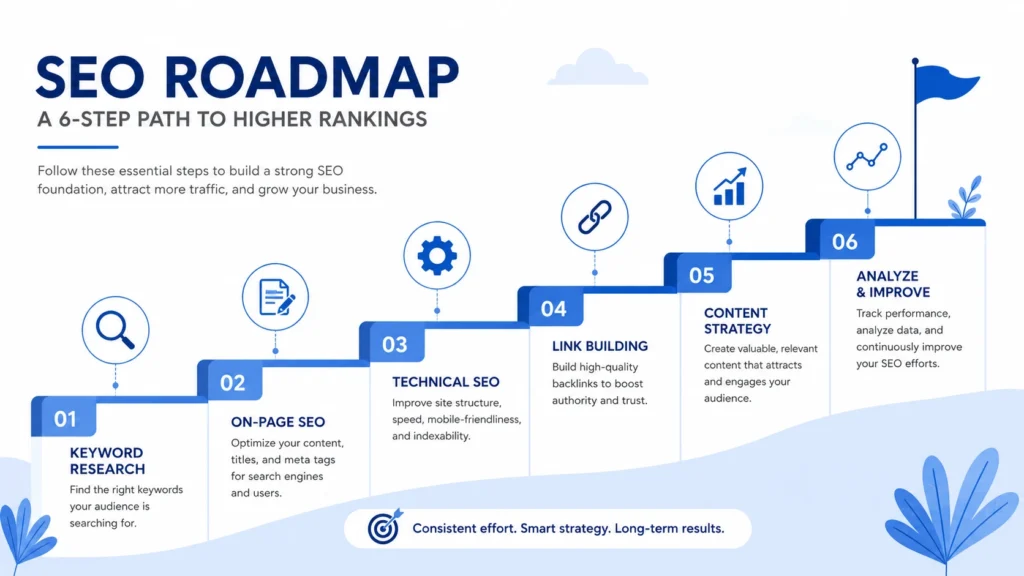
SEO roadmap infographic showing a 6 step path to higher rankings: keyword research, on-page SEO, technical SEO, link building, content strategy, and analyze and improve.

How Do I Start SEO for Beginners?

You start SEO by fixing three things first: what your page says, how fast it loads, and whether real users stay on it. Google’s December 2025 core update pushed these basics even harder. Sites with thin pages or slow load times lost rankings fast, even when they had decent content. This guide answers how do I start SEO for beginners step by step. No fluff, no jargon you don’t need. Just a clear path you can follow today. What Is SEO? SEO stands for Search Engine Optimization. It means shaping your website so Google can find it, understand it, and show it to people searching for answers you provide. Think of it like organizing a shop. If your shelves are labeled clearly and your best products sit near the entrance, customers find what they need fast. SEO does the same thing for your website inside Google’s search results. Good SEO covers three things: the words on your page, the technical setup behind it, and the trust other sites place in you through links. Miss one of these and your rankings suffer, no matter how good your writing is. Why Should Beginners Learn SEO? Every business with a website competes for attention. If you don’t show up on page one of Google, most people never find you. Learning SEO basics for beginners gives you control over that visibility instead of paying for ads every time you want traffic. SEO also builds a skill that pays off for years. Once you understand it, you can apply it to any website, blog, or online store you run in the future. It’s one of the few marketing skills that keeps working while you sleep. If you want structured, hands-on training instead of piecing things together from blog posts, Localpro 1 Institute offers practical SEO courses Rawalpindi residents can join in person or online. A guided course can save you months of trial and error compared to learning alone. What Google’s December 2025 Core Update Means for Beginners Google rolled out a major core update in December 2025, and it changed what “good content” means in practice. The update leaned harder on E-E-A-T, which stands for Experience, Expertise, Authoritativeness, and Trust. Pages written by people with real experience on a topic now rank better than generic, surface level posts. Google’s systems got better at spotting content that repeats what’s already online without adding anything new. Page speed also mattered more after this update. Slow loading pages and clunky mobile experiences lost ground, even on sites with strong content. Google measured this through Core Web Vitals like loading speed and how fast a page responds to clicks. Behavioral signals played a bigger role too. If users click a result, then bounce back to Google within seconds, that page loses trust over time. Content that actually answers the question, quickly and clearly, holds its position better. For a beginner, the lesson is simple. Write from real experience, keep pages fast, and give users their answer without burying it under long introductions. Learn the Three Main Types of SEO There are three main types of SEO, and beginners need all three working together. On page SEO covers everything you control directly on your website. This includes your titles, headings, images, internal links, and the actual words in your content. Technical SEO deals with how your website works behind the scenes. Site speed, mobile friendliness, secure connections, and a clean site structure all fall under this category. Off page SEO is about your reputation outside your own website. Backlinks from other trusted sites, mentions in the press, and social signals all build this kind of authority over time. Skipping any one of these three areas will hold your rankings back, even if the other two are strong. Step-by-Step Guide to Start SEO for Beginners Here is exactly how to learn SEO step by step, without wasting time on things that don’t move the needle. Step 1: Pick your niche and know your audience. Before touching any tool, get clear on who you’re writing for and what problems they need solved. SEO without a clear audience turns into guesswork. Step 2: Do keyword research. Find out what your audience actually types into Google. Look for keywords with real search volume but manageable competition. Tools like Google Keyword Planner or Ubersuggest work well for beginners. Step 3: Study search intent. Every keyword has an intent behind it. Someone searching “buy running shoes” wants to purchase. Someone searching “best running shoes for flat feet” wants information first. Match your content to that intent. Step 4: Optimize your on page elements. Place your main keyword in your title, first paragraph, and at least one subheading. Write clear meta descriptions. Use descriptive alt text on images. Keep your URLs short and readable. Step 5: Fix your technical foundation. Check your site speed using PageSpeed Insights. Make sure your site works well on mobile. Set up an XML sitemap and submit it through Google Search Console. Step 6: Build internal links. Link your new content to older, related pages on your site. This helps Google understand your site structure and keeps visitors reading longer. Step 7: Earn backlinks. Reach out to other website owners in your niche. Guest posts, partnerships, and genuinely useful content are the most reliable ways to earn links over time. Step 8: Track your results. Use Google Search Console and Google Analytics to watch what’s working. Adjust pages that aren’t performing instead of abandoning your strategy after a few weeks. Follow these steps in order and you’ll have a working answer to how do I start SEO for beginners within your first month. Essential SEO Tools Every Beginner Should Use You don’t need an expensive toolkit to get started. A handful of free and low cost tools cover almost everything a beginner needs. Google Search Console shows you exactly how Google sees your site, including errors and search performance. Google Analytics tracks your visitors, where they come from, and what

How Do I Start SEO for Beginners? Read More »

Is SEO Part of Web Development

Is SEO Part of Web Development? Explained Simply

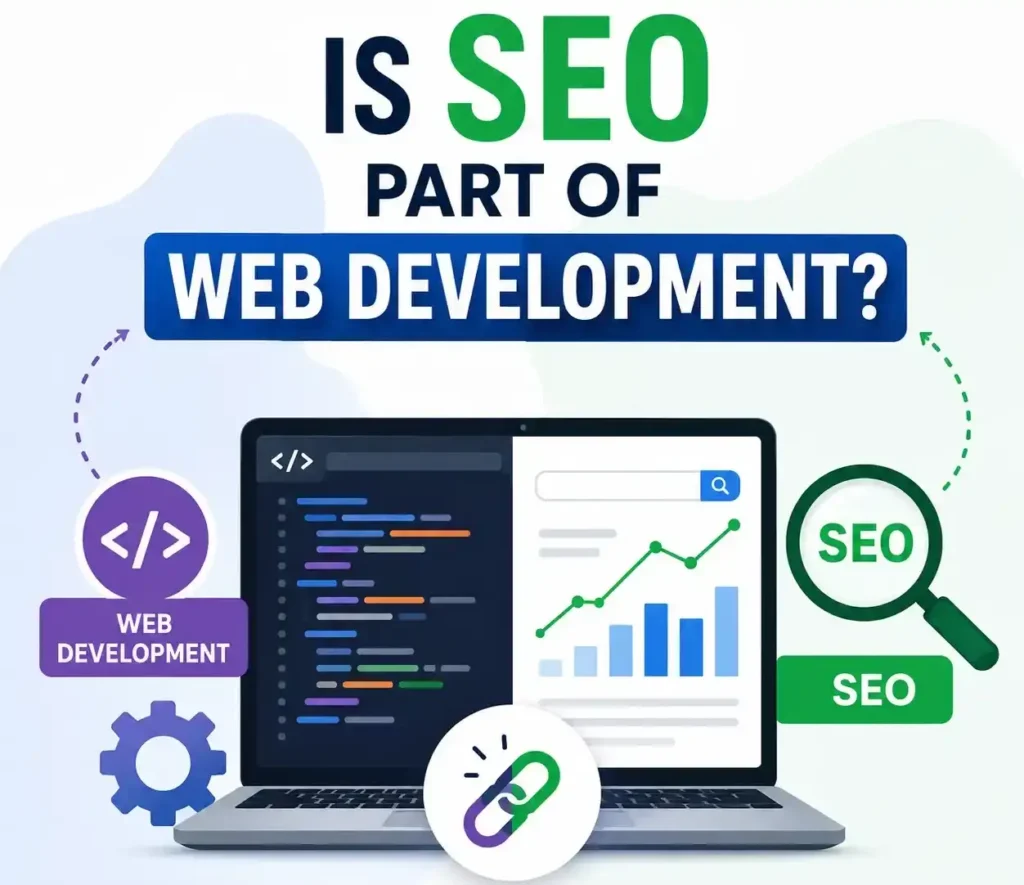
A lot of business owners assume hiring a web developer automatically covers SEO too. It doesn’t always work that way, and that confusion around is seo part of web development causes real problems down the line, sites that look sharp but never actually show up when someone searches for what the business offers. The honest answer is that SEO and web development overlap in meaningful ways, but they aren’t the same discipline. This guide breaks down exactly where they connect, where they separate, and what that actually means for building a website that gets found instead of just built. What Does SEO Mean in Web Development? SEO in web development refers to the technical and structural choices made while a site is being built that directly affect how well search engines can crawl, read, and rank it. That includes clean code, proper heading structure, fast load times, and mobile responsiveness, the kind of decisions that happen behind the scenes long before content ever gets written. These aren’t add-ons bolted on after launch. They’re part of the foundation itself, decided during wireframing and development, not patched in afterward. That’s exactly why seo and web development end up so tightly connected from the very first line of code, one weak decision early on tends to create SEO problems that are much harder to fix later. Read More: Is SEO Actually Part of Web Development? Partially, yes. Certain SEO elements can’t really be separated from the build process itself. A developer who ignores site speed, mobile usability, or clean HTML structure is handing a client a site that will struggle to rank no matter how good the writing later becomes, since search engines evaluate technical performance before they ever get to content quality. But is seo part of web development in its entirety? Not really. Full SEO also includes ongoing content strategy, keyword research, link building, and performance tracking, work that continues well after a site goes live and usually sits outside a developer’s day-to-day responsibilities entirely. Which Parts of SEO Are Included in Web Development? Several SEO elements genuinely belong to the development process itself, not something layered on afterward. Site architecture — a logical URL structure and internal linking framework decided during the build Page speed optimization — image compression, code minification, and server response times set at the technical level Mobile responsiveness — making sure the site actually functions across devices, a core development task with direct SEO consequences Clean, semantic HTML — proper heading tags and structured markup search engines can actually read correctly Schema markup implementation — structured data added during development that helps search engines understand what a page is actually about Secure, crawlable infrastructure — HTTPS setup and correct robots.txt configuration handled at the code level These tasks sit squarely inside seo in web development, since they require coding knowledge and happen well before a single blog post or landing page gets published. Practical Best Practices for Including SEO in Web Development Building SEO into a site from day one saves real time and money compared to retrofitting it after the fact, which almost always costs more and takes longer than doing it right the first time. Developers should prioritize clean, lightweight code from the start, since bloated code slows load times and directly hurts rankings, often in ways that are hard to reverse later. A logical site structure with clear navigation matters just as much, both for visitors trying to find something and for search engines trying to understand how pages connect to each other. Building in alt text fields for images during development, instead of adding them as an afterthought once the site’s already live, keeps accessibility and search visibility connected from the very beginning. Testing mobile performance throughout the build, not just right before launch, catches problems while they’re still cheap and easy to fix. Setting up proper redirects and avoiding broken links during any site migration also protects rankings a site already earned, rather than losing that ground during a relaunch that wasn’t planned carefully enough. Which Parts of SEO Are Not Pure Web Development? Several genuinely important SEO components sit entirely outside standard development work, no matter how skilled the developer is. Keyword research and content strategy require ongoing market and competitor analysis, not coding ability. Link building depends on outreach and relationship building, work that has nothing to do with writing code at all. On-page content optimization, adjusting headlines, meta descriptions, and body copy based on how pages actually perform, requires continuous monitoring long after a site launches, not a one-time setup. Local SEO tasks, managing a Google Business Profile or building local citations, also live entirely outside a developer’s scope. This is really where the importance of seo for website success becomes obvious. A beautifully built, technically flawless site with zero content strategy behind it still won’t rank for the keywords that actually bring in business. How SEO and Development Teams Should Work Together The strongest results tend to come from developers and SEO specialists collaborating from the earliest planning stages, not working in separate silos and comparing notes only after launch. When a developer understands basic SEO principles, and an SEO specialist understands what’s technically realistic to build, fewer conflicts come up down the line. A site built without any SEO input during planning often needs expensive rework once ranking issues start showing up months later, sometimes a near-total restructure. Bringing SEO expertise into the wireframing and planning phase, before any code gets written, prevents most of these problems from ever happening in the first place, and it’s a lot cheaper than fixing them retroactively. Conclusion Is seo part of web development really comes down to overlap, not equivalence. Technical SEO elements like site speed, structure, and mobile responsiveness genuinely belong to development work. Content strategy, link building, and ongoing optimization require separate, continuous effort well beyond a site’s initial build. LocalPro1 Institute offers SEO course in Rawalpindi that bridges both sides of this equation from day

Is SEO Part of Web Development? Explained Simply Read More »

Laptop on a wooden desk showing a colorful dashboard interface, next to a coffee cup and potted plant

Does WordPress Have a Future? Here’s What the Data Shows

Yes, WordPress has a future, and a strong one at that. It still powers a huge share of the internet, from small blogs to major retail brands. New tools keep launching, yet WordPress keeps growing alongside them. The real question behind “does WordPress have a future” is not whether it survives. It’s whether it keeps pace with faster, AI-driven builders. So far, the platform has answered that question with steady updates and stronger tools. What Is WordPress? WordPress is a content management system, or CMS. It gives you a dashboard to build pages, publish posts, and add features through plugins. You don’t need coding skills to get started. Two versions exist today. WordPress.org is the self-hosted version, and it’s the one most businesses and developers use. WordPress.com is a simpler, hosted option with fewer controls. This article talks about WordPress.org, since that’s the version behind most professional sites. Why People Question WordPress’s Future New website builders keep showing up, and many of them use AI to build entire sites in minutes. That speed has made some people wonder if WordPress is falling behind. Part of the concern comes from how the web itself is changing. Search results now include AI Overviews, and users often get answers without clicking a link at all. Some site owners assume an older platform like WordPress cannot adjust to that shift. This is exactly why “does WordPress have a future” keeps trending in SEO forums and comparison articles. Does WordPress Have a Future? Look at the numbers, and the answer becomes clear. WordPress still runs a large portion of all websites online, far more than any single competitor. New sites launch on it every day, not just old ones sticking around. The platform also keeps updating its core software. Recent versions added faster loading tools, better image handling, and stronger security checks. None of that points to a platform on its way out. It points to one that keeps adjusting to stay useful. There’s also the business side to consider. Agencies still build client sites on WordPress because it’s cheaper to maintain than custom code. Hosting companies keep investing in WordPress-specific servers, which would not happen if demand were fading. When an entire hosting industry builds products around one platform, that’s a strong signal about where things are headed. Developers also keep contributing. Plugin updates, security patches, and new features roll out constantly, often within days of a problem being reported. That kind of active maintenance is rare for software this old, and it’s a big part of why the platform keeps its edge. Why WordPress Still Has a Strong Future WordPress has three things working in its favor that newer builders still struggle to match. First, it’s open source. Thousands of developers improve the software every year, for free. No single company controls its direction or pricing. Second, it scales without limits. A small blog and a massive online store can both run on WordPress, often on the same core software. Third, there’s a real path to learning it well. If you want a skill that pays off long term, enrolling in WordPress courses in Islamabad through Localpro 1 Institute gives you hands-on training in setup, design, and SEO. That kind of structured learning turns WordPress from a confusing tool into a real career skill. How WordPress Is Adapting in 2026 Google released a major core update in December 2025, and it changed what counts as a quality page. Sites with slow speeds or shallow content dropped in rankings within days of the rollout. WordPress responded fast. Many themes now ship with better Core Web Vitals scores out of the box. Hosting providers improved server speed and caching to help sites meet Google’s updated benchmarks. The block editor also added stronger support for structured data, which helps content get pulled correctly into AI Overviews and other AI-generated answers. This kind of quick adjustment answers “is WordPress future” concerns directly. A platform that reacts fast to major search changes is not a platform standing still. WordPress vs the New Generation of Website Builders The debate around WordPress vs website builders’ future often misses the real point. It’s not about which tool launches a site faster. It’s about which one supports long-term growth. AI-powered builders like Wix Studio or Framer let you launch a page in under an hour. That works well for a single landing page or a portfolio with no plans to expand. WordPress takes longer to set up properly. But once it’s running, you can add ecommerce, memberships, custom booking systems, or multilingual content without switching platforms. For any business planning to grow its content or its product line, that flexibility matters more than a fast first launch. Industries That Still Depend on WordPress Several industries rely on WordPress daily, and they are not slowing down. Media and publishing sites use it to manage thousands of articles with structured, searchable archives. Ecommerce brands use WooCommerce to run stores with full control over checkout and shipping rules. Educational platforms and training institutes use WordPress with learning management plugins to sell and deliver courses online. Local service businesses, from clinics to law firms, also depend on WordPress for its combination of SEO tools and easy content updates. Across all these industries, the platform keeps proving its staying power. Nonprofits and government-adjacent organizations also lean on WordPress, mainly because it’s affordable and easy to hand off between staff members over time. A city council or a small charity does not usually have a full development team on payroll. WordPress lets non-technical staff update pages, publish notices, and manage donation forms without hiring outside help every time something changes. Even software companies use WordPress for their marketing sites, while running their actual product on separate infrastructure. That split shows how flexible the platform really is. It doesn’t need to run everything to stay valuable. It just needs to handle content and public-facing pages better than the alternatives, and it usually does. Challenges WordPress Faces in the

Does WordPress Have a Future? Here’s What the Data Shows Read More »

Woman typing on a laptop with a colorful dashboard screen, coffee cup and notebook on the desk

Is WordPress Still Relevant in 2026? Here’s the Honest Answer

Yes, WordPress is still relevant in 2026. It still powers close to half of all websites on the internet. That is not an accident. It keeps updating, it works with AI tools now, and it still gives you full control over your site. So if you are asking is WordPress still relevant in 2026, the short answer is yes, but with some conditions. Let’s break down why, and where it still falls short. Why Is WordPress Still Popular in 2026? People keep choosing WordPress because it is free, flexible, and easy to start with. You do not need to write code to build a working site. You can pick a theme, add a plugin, and publish content the same day. It also has the biggest community of any website platform. If you get stuck, someone has already asked your question in a forum. That kind of support is hard to replace. This is part of why is WordPress still used so widely today. Businesses trust it because thousands of other businesses already use it and rely on it daily. WordPress in 2026: What Has Changed? WordPress has changed a lot in the past few years. Full site editing is now the normal way to build pages, not a side feature. You can drag blocks around and see changes live, without touching a single line of code. AI tools are also built into many popular plugins now. Some can write draft content, suggest images, or fix broken links for you. This saves real time for site owners who work alone. The core software also updates faster than before. Security patches roll out quickly, and older, unsupported themes get flagged so users know to replace them. Is WordPress Good for SEO in 2026? Yes, WordPress is still strong for SEO, especially after Google’s December 2025 core update. That update rewarded pages with real depth, clear structure, and genuine expertise. It did not reward thin, repetitive content padded with keywords. WordPress fits this shift well. Plugins let you control page titles, meta descriptions, internal links, and schema markup without hiring a developer. You can structure long, detailed articles the way Google now prefers. The catch is that WordPress itself will not rank your site. A slow, bloated WordPress install can hurt you just as fast as a well-built one can help you. Speed and clean code still matter more than the platform name. Is WordPress Still Good for Blogging in 2026? For blogging, WordPress remains one of the best choices available. It was built as a blogging tool first, and that history still shows in how smooth the writing and publishing process feels. Categories, tags, scheduled posts, and comment moderation all work out of the box. You do not need extra plugins for basic blogging. This keeps things simple for writers who just want to focus on their content. Is WordPress Still Good for Business Websites? Business owners still pick WordPress because it grows with them. A small service business can start with a five-page site and later add booking forms, staff pages, or a blog without switching platforms. It also connects easily with email tools, payment systems, and customer databases through plugins. For many small and mid-sized businesses, this makes WordPress a genuinely practical long-term choice, not just a starting point. Is WordPress Still Good for Ecommerce in 2026? WordPress, through WooCommerce, still runs a huge share of online stores worldwide. It handles products, payments, shipping, and taxes well, and store owners can customize almost every part of the checkout process. Large stores with thousands of products sometimes need extra technical work to stay fast. But for small and growing stores, WooCommerce still offers more control than most closed platforms allow. WordPress vs Other Website Platforms in 2026 Website builders like Wix and Shopify have improved a lot, and AI site builders are newer competitors too. They are often faster to set up and need less maintenance. But WordPress still wins on ownership and flexibility. You own your files, your data, and your design choices. With builders, you are often locked into their system, their pricing, and their limits. If speed of setup matters most, a builder might suit you better. If long-term control matters most, WordPress still holds the advantage. Is WordPress Safe and Secure in 2026? WordPress itself is secure when kept updated. Most security problems come from outdated plugins, weak passwords, or cheap hosting, not from WordPress’s core code. Keeping plugins updated, using strong passwords, and choosing reliable hosting solves most of these risks. A well-maintained WordPress site is not more dangerous than any other platform. Is WordPress Fast Enough in 2026? Speed is a fair concern. An unoptimized WordPress site can load slowly, and slow pages hurt both rankings and visitor experience. This is one area where competitors sometimes have an edge by default. The fix is manageable though. A lightweight theme, image compression, and a caching plugin usually solve most speed issues. Site owners who take speed seriously can still hit strong load times on WordPress. Is WordPress Still Worth Learning in 2026? If you are asking is WordPress worth learning in 2026, the answer is yes. Businesses still need people who can build, manage, and fix WordPress sites. That demand has not gone away. This skill also opens real income opportunities, from freelancing to full-time roles. If you want structured, hands-on training, LocalPro1 Institute offers wordpress courses in Rawalpindi that walk you through real website building from the ground up. Learning WordPress now also means learning how it works with AI tools, since that combination is becoming standard in the industry. Who Should Use WordPress in 2026? WordPress fits bloggers, small business owners, freelancers, agencies, and online store owners who want control over their site without paying for custom development. It also suits anyone planning to scale their site later. Who Should Not Choose WordPress? If you want a site live in one afternoon with zero setup, a simple builder may suit you better. WordPress

Is WordPress Still Relevant in 2026? Here’s the Honest Answer Read More »